February 2010 Archives
Hot Like Mexico, Rejoice!By on February 28, 2010 10:29 AM | No Comments

When you live in Michigan, you start to forget what the sun feels like on your face. So for Spring Break each year, Maxime and I travel down to Mexico to meet our friends Nolberto (who blogs here!) and his partner Chema for a week of mischief and splendor. Aaron joined this year, and after a 14 hour journey (2 flights and one bus ride) we made it to Acapulco for some fabulousness.
Anyholler, obviously blogging will be a bit slow this week. But I'll be popping in to share a photo from time to time :)
Twitter Comments UpdatedBy on February 18, 2010 6:21 PM | 1 Comment
I know some folks were experiencing issues with Twitter Comments. Any luck now? E-mail me if it works / doesn't!
Submit Your Thoughts: The Anonymous Gay Sex Column!By on February 18, 2010 2:36 PM | No Comments

Got something to say about gay sex, but don't want your name attached? Every Wednesday starting next week, we'll be posting anonymous columns from gay/bi/queer men just like you! Anything goes: Best sex you ever had, tips and tricks you've learned along the way, and reflections on the trials and tribulations you've encountered in your sexual escapades are all welcome.
Submissions should be at least 500 words with a rough maximum around 1000 words. They will be posted in the order received, with editing only for grammar. Send your submissions by e-mail to  . Include a title and I'll publish them here under an anonymous user account. Once published, the e-mail will be destroyed. Your identity will never be revealed!
Looking forward to reading and sharing your dirty thoughts!
xoxo
T
Can "Uncertainty" Help us Better Understand "Sexual Risk?"By on February 14, 2010 3:18 PM | 4 Comments
"Risk" as a conceptual approach for much of the research on health has come under attack from many sides. Risk is everywhere and nowhere, it seems. When it comes to gay men's health, gay men's sexual risk practices have particularly been scrutinized by researchers who wish to stop gay men from doing such naughty things as having sex without condoms. Many have suggested that rethinking "risk" (traditionally conceived of through the lens of an isolated rational actor making complex cost-benefit analyses aimed at maximizing returns and minimizing harm for him/herself) as a concept is a necessary step towards creating a more effective / ethical / social public health.
As I was reading for my class today on the Sociology of Law, I came across this very interesting distinction between "risk" and "uncertainty" that gets made in the literature on organizational behavior:
"On the whole, then, high-technology start-up financing poses challenges not only of risk but also of uncertainty. Although lay parlance often employs these terms interchangeably, the organizational decision-making literature uses them to describe two distinct conditions. Under conditions of "risk," decision-makers may not be able to predict the future deterministically, but at least they can describe it probabilistically: with a little effort, individuals can identify the full range of options and outcomes, and they can determine roughly how likely it is that any given option will produce any particular outcome. Consequently, despite the presence of risk, decision-makers can still make rational choices based on expected-value calculations, and markets can still produce efficient coordination based on contingent-claims contracts.Uncertainty, on the other hand, arises when decision-makers cannot determine either (1) the full menu of alterative behavioral options or (2) the relative probability of alternative possible outcomes. Unlike risk, uncertainty is deeply incompatible with the neoclassical model of fully rational decision-making. Instead of producing a careful expected-utility analysis of all lines of action, conditions of uncertainty tend to produce "boundedly rational" decision strategies, involving "good enough" choices, gut feelings, and rules of thumb. At a more macroscopic level, uncertainty elevates transaction costs and exacerbates intra-organization strains and power struggles. Consequently, unresolved uncertainty poses a fundamental cognitive and organizational obstacle to the formation and maintenance of stable markets for high-technology start-up capital."
-- Suchman, M. & Cahill, M. (1996) "The Hired Gun as Facilitator: Lawyers and the Suppression of Business Disputes in Silicon Valley." Law & Social Inquiry, 21(3): 679-712.
So my questions of the day: What would it mean to reconceptualize men's safer sex practices as enacted in an environment of uncertainty -- rather than in an environment of risk? Is "risk" really the appropriate concept for understanding these complicated, negotiated practices?
Dykon k.d. lang Opens Winter OlympicsBy on February 13, 2010 7:13 PM | No Comments

Check out the video here of lang's wonderful rendition of "Hallelujah".
Isn't There Anyone Here For Love?By on February 12, 2010 2:29 PM | 1 Comment
It's day three of sickness. Hence my old movie marathon. Today I'm watching Gentlemen Prefer Blondes, featuring Marilyn Monroe and Jane Russell. You'll remember the famous "Diamonds are a girls best friend" scene. But today I thought I'd highlight this GAYtastic scence featuring Jane and some scantily clad dancing muscle-queens. Enjoy!
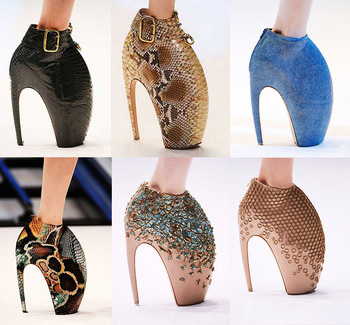
In Memory of Alexander McQueenBy on February 11, 2010 10:18 PM | No Comments
By on February 9, 2010 10:17 PM | 2 Comments
I hadn't heard about PEP411.com before this video, but it's quite wonderful. This video is aimed at young Black men, detailing how you can get your hands on post-exposure prophylaxis within 36 hours after a potential exposure to HIV. The sooner the better, theoretically, though the science behind the timing is somewhat murky. What we do know for sure, however, is that when begun soon after exposure, it can dramatically reduce your odds of serconversion. The drugs are essentially a cocktail of anti-retrovirals, just like those prescribed to HIV-positive people. Taken immediately after exposure, it is thought that the drugs are able to inhibit the virus from taking hold of your immune system.
Here's the video:
Although I will note that the video states that "limiting your number of sexual partners" reduces your HIV risk. I resent and disagree with this widespread assertion, and believe it is this prevention message that has led some men to the idea that boyfriends are "safety zones" from infection. A recent modeling study estimated that the majority of new infections in major metro areas among MSM today are the result of sex with primary partners.
Join the Homosexual Intifada!: Reading Desiring Arabs in My Bubble BathBy on February 8, 2010 12:51 PM | 2 Comments

How could I not read this book? I just had to! Precisely because I feel that I have been pretty good these last years at desiring Arabs. But what a disappointment! In spite of an obvious knowledge of his field, I found myself in a strong disagreement with Massad's point of view particularly as it is expressed in the chapter, "Re-Orienting Desire: The Gay International and the Arab World." Here, Massad analyzes the so-called "Gay International" movement in an effort to criticize Western gay activists and more generally international human rights agencies that purport to fight homophobia internationally. He argues that these activists operate without any understanding of non-western sexualities, and as such engage in a kind of cultural imperialism in their efforts. More specifically, he argues:
"By inciting discourse about homosexuals where none existed before, the Gay International is in fact heterosexualizing a world that is being forced to be fixed by a Western binary". (188)
Let me first raise some suspicion regarding Massad's assertion of a so-called "Gay International." I am reminded here of paranoid delusions of a very powerful communist movement in the USA during the McCarthy era. I'm not the first to argue this about Massad - as Joseph Scagliotti noted in his review of the book (titled "The Myth of the Gay International"):
In other words, sex was all cool and fluid in the ancient East, and guys used to be able to "penetrate" other guys and not have to worry about being called anything. Those were the good old days, when sex didn't have to have horrible Western identities. Everyone was straight, so life was easy and gay. Then along came the "Gay International" and ruined it all, compelling poor straight people or bisexuals in those countries who are practicing their same-sex expressions into a gay (or straight) identity, and bringing out the worst in governments that previously paid no attention but now are forced to call in the hangman for the lovers who choose the wrong side.
If the Gay International was as influential as Massad implies - able to organize thousands of activists with a multi-million dollar budget - then presumably it would have found some success in securing political exile for Arabic people who have fled their countries of origin because of homophobic persecution. This, of course, is not the case.
Moreover, in lumping "Western gay activists" into this category of the "Gay International," Massad is himself constructing a conception of "the West" as coherent and unproblematic. Yet we know that within the West there are spirited and highly contested debates over what should constitute a politics of (homo)sexual identity. Gay marriage, for instance, has been the site of considerable debate between those who think it is the end-all-be-all of "gay rights," while other, more radical perspectives view it is an assimilationist effort to gain access to a corrupt, sexist institution.
Thus, even if we take Massad to be correct in his critique of the Orient as the colonial production of a Western knowledge, he should also think that both the categories of "Western world" and "Arab World" need to be deconstructed: their coherence is a facade, their own identities are plural and often in opposition. So when Massad reproaches this mythological "Gay International" for imposing a western homosexual identity in the Arabic world, I wonder what kind of essential identity does he postulate for the Arab World, and why this cultural unity should not be challenged by marginal subcultures?
After all, if the existence of the Gay International is possible today, isn't it the consequence of some historical, aggressive, proud, and/or painful sexual liberation initiated by a bunch of queers many years ago? I understand that his kind of approach may be strategic - at least from a political point of view - in that it is clearly a response to racist and neo-colonial constructions of Arabic cultures. But how could Massad avoid the issue of questioning the cultural hegemony of one dominant identity over many subaltern identities struggling for survival and expression in the margins of the Arab World?
I am thinking here of Jarrod Hayes' argument in his recent book, Queer Nations: Marginal Sexualities in the Maghreb, in which he argues that North African writers (for instance Driss Chraibi, Rachid Boudjedra, Assia Djebar) succesfully deconstructed the idea of one, united, coherent identity for Arabic Nation. This national identity which, of course, is patriarcal and homophobic, is regularly challenged by arab artists who promote alternative identities and ways of live for the Arab world in which they live. On a more contemporary note, I wonder what would Massad make of Abdellah Taia, an openly gay Moroccan writer who fiercely advocates in the Moroccan media in favor of a political acceptance of homosexuality in Morocco. Is Taia a secret agent of the Gay International? Has he been brainwashed by western ideology?
Another source of disappointment, not to say anger, is the way Massad revisits the gay bashing that happened in Egypt on the Queen Boat. In the section "Defending Rights" of his third chapter, Massad offers his interpretation of the 2001 police raid against a gay party going on in a boat on the Nile in Egypt. In the end, 55 men were arrested and had to face, on top of a trial, the fury of the crowd. This police raid triggered a variety of reactions in Western news outlets, most of which tended to fault the police and sympathize with the Egyptian men who were arrested. This is what Massad writes:
"Clearly most Egyptian men who practice same-sex contact neither know English nor have the wherewithal to afford Internet access, much less know how to use it. This is important in that the police do not seek to, and cannot if they were so inclined, arrest men practicing same-sex contact but rather are pursuing those among them who identify as 'gay' on a personal level and who seek to use this identity as a group identification through social and public activities. The campaign of the Gay International misses this important distinction". (183)
Interesting distinction, indeed, between Egyptian men who do not identity as gay and Egyptian men who do identify as gay: Massad suggests we should not worry for the first group because their homosexual practices are an "authentic" cultural habit of the Arab world and are thus not subject to harassment. The latter group, however, appears to be interpreted by Massad as seeking persecution because of their provocative choice of adopting a "Western" conception of gay identity. Thus, their hassassment is not the result of any sexual deviance, per se, but rather the outcome of cultural transgression -- the product of "choosing" to import or impose in the Arab world some Western gay way of life.
Ok... Perhaps this is true. But what is so wrong with that? Is there any "purity" of the homosexual Arabic culture that cannot and should not be soiled by the métissage with other cultures? Massad does not seem to have any compassion for these marginal Arabic men who want to speak English, have access to the Internet and Western tourists, and -- worse yet! -- embrace a so-called "Western gay identity." Notice that Massad does not argue that police should not have arrested these men, he writes instead that their provocative behavior triggered their arrest and that the support given by the Gay International is the reason why Egyptian authorities decided to be extremely violent in their campaign against homosexuality. Thus, it seems that Massad understands the raid to be an unproblematic and logical reaction within the Arab context.
It is very sad, in the end, to feel that Massad, in the name of a political resistance against western hegemony, is not able to understand and support the internal logics of sexual resistance that happen within what he likes to think of as a united, coherent, Arab World. The documentary by Parvez Sharma entitled A Jihad for Love about the Islamic faith of Arabic homosexual people living in the Arab World is a relevant illustration of the plurality of interpretation of the Koran and of the plurality of lifestyles that result from these interpretations. Massad's distinction seems rather Manichean: there is not on one side a Arabic correct and discreet homosexuality, and on the other side an imported, neo colonial western homosexuality.
The title of my post, "Join the homosexual intifada!" is a reference and a tribute to a political porn movie by Bruce LaBruce, The Raspberry Reich, which provocatively articulates in how, in Western societies, extreme left revolutionary activists struggled to understand that to defeat the capitalist system, they had to promote a political Revolution that was also a sexual liberation. When in 1970 Jean Genet visited Palestinian activists in refugee camps, they knew he was openly gay but welcomed him with hospitality and gratitude for his political commitments. In an interview, Jean Genet went as far as saying that he was on the side of Palestinians because of his sexual fetishism for Arabic men. He was, against his own country, in favor of Algerian independence and his grave can be found, today, in a beautiful village in Morocco. What I have in mind, when I think of an expression like the "homosexual intifada", is the political and emotional connections that can happen between queers from both Western and Arab societies. Desiring Arabs, indeed!
Gay men make great uncles?By on February 6, 2010 3:03 PM | 2 Comments
Discussion about the "gay gene" is still happening. The health section of the Los Angeles Times recently published an article that tries to account for the existence of male homosexuality from an evolutionary perspective. According to the article, the gay gene survives, because gay men perform an important social function: they "make great uncles." Well intentioned, the author is trying to debunk a popular conservative view that explains homosexuality as a lifestyle, a choice, or a sin. She writes,
And if you don't believe in evolution--or that homosexuality in men may have biological roots, but is rather a lifestyle chosen to affront--well then, this study won't help explain anything for you. Good luck finding an alternative.
I appreciate the author's confrontation of right-wing and Creationist perspectives. Still, I have been wary of biological explanations of homosexuality ever since I read David Halperin's book Saint Foucault. In the first place, the "pink gene" theory is scientifically specious. In the second place, it's kind of offensive/heteronormative to argue that gay people should be allowed to exist because they're good babysitters. As much as I look forward to being an uncle, I have trouble imagining that my genes made me gay so that I can be a "helper in the nest." Third, the attempt to establish certain forms of sexual desire as "natural" implies that other forms of desire are "unnatural." People cannot so easily be divided into the categories "homo-" and "heterosexual." Some of us identify as bisexual; some of us prefer to sleep with transgender individuals; some of us prefer cross-generational intimacy; some of us get our kicks by licking black leather boots. Although these kinds of desire cannot be traced back to a gene, they're still legit.
Thanks to Lady Bartlett for the link.
The View from the Bottom!: "What condoms are best for the gays?" (Ep#11)By on February 5, 2010 9:36 AM | No Comments
It's time for another installment of The View from the Bottom, the vlog about gay male health and sexuality as told from the perspective of three bottomless bottoms. This week, Trevor, Rostom, and Maxime discuss what they got for Christmas, how to deal with online harassment, what condoms are best for bottoms, and Pat Robertson' repugnant comments about Haiti.
Being Fierce About What You Believe In: France and the US in ContrastBy on February 4, 2010 1:01 PM | 2 Comments
Oh, Trevi! Your post on how annoying it is to have to decipher the sense of the word "problematic" when it is actually used as one of these hypocritical detours to express a disagreement in a gentle, almost clandestine way, reminded me of a cultural gap between French and American people in terms of holding a conversation and expressing oneself publicly.
Of course these are only my subjective thoughts, based on just four years spent in the golden cage of Ann Arbor, Michigan, so who I am to speak in the name of French people and to make some highly disputable generalizations about American folks? Well, this previous statement is actually symptomatic of what I want to share with you: the need to put some rhetorical lube before expressing a personal opinion so that, in case of a debate, or a disagreement, I already anticipate a space for modifying my opinion and reaching an agreement - and saving my ass.
I noticed this tendency, in America, to be careful when you are about to speak up your mind. You are encouraged to be sincere, of course, but people tend to formulate their opinions with a rhetoric that reflects flexibility and humble skepticism. In my experience, the American conversation relies on the use of conditional -- like "I would say" or "I would think" -- or the seemingly ever-recurring "maybes" and euphemistic expressions (the word "problematic" is one of these euphemisms). That's what I call "rhetorical lube." You don't want to hurt anyone's feelings by expressing yourself. Rather, you want to make sure you're still being seen as a sociable, smiling, constructive person. A "team player."
Thinking about this rhetoric, and contrasting it with the way French people tend to express themselves, I was struck by a cultural gap. In France, we tend to be much more explicit than American people, straight to the point, without fear of inciting an intense conversation or an argument. When you look for a job in France, you do not have to prove how sociable and friendly you can be, how compatible you are with many different kinds of people, and how careful you are to respect everyone's sensibility. In other words, you are expected to be polite, but you are also expected to have a personality and not to fear conflict when defending your beliefs. In America, people tend to be careful to avoid personal conflicts. They do their best to avoid being labeled "defensive" because others might perceive them as deviating from the politically correct, mainstream, and utterly safe opinions that circulate in everyday life.
That's when it becomes more than just an issue of rhetoric. Let me articulate here a political interpretation on why would French people be less concerned about conflicts, about being loud on their beliefs, whereas Americans would tend to value courteous dialogue and constructive behavior. I propose that, more than just a matter of different rhetorical styles, these differences have political roots. In France, even if you're a poor worker, you can still rely on the nanny state in terms of having access to a free, high quality health system. And if you think you were fired for unfair reasons, you can rely on the free Prud'hommes system in order to sue your boss and reclaim a compensation for any abuse of power. The same for education: you don't have to plan a huge budget for your kids because in France most of the schools, including the most prestigious and elitist ones, are not expensive and do not select their students by the financial profile of their parents.
Of course I am not convinced myself by what I wrote (Bourdieu would spit on my face), France is far from being a paradise, deficits are huge and nobody seems to be willing to quote us as a model. On top of that I came to the University of Michigan to start a PhD precisely because the conditions for studying and the resources here are just outstanding, so let me rephrase my opinion in a less stereotypical way: in spite of all the drawbacks of the French nanny state, of all the big lies on the French egalitarian system in terms of education and public health insurance, it still remains obvious than French people, in comparison to American people, are not afraid of being often on strike, of suing their bosses, and of having a big argument in public when they feel they are right!
I want to interpret this as the political consequence of knowing that, in case of cancer, or of unemployment, you know you can rely on the nanny state for support. On the contrary, I think that if Americans are so concerned about being seen as sociable and not defensive, it is because in their contemporary society, they can only rely on themselves and think twice before taking a risk. You live constantly on loans. We don't. You have to deal with an army of lawyers to protect yourself or attack the others, we don't. That is a big, huge, significant difference. You have much more to lose when you rely on yourself, so you think twice before speaking up your mind. And the Fox News constant brainwashing on "don't forget to live with fear" does not help at all. It only confirms the dynamics of a safe, selfish individualism!
But let me end on this note, and this is my outing as a socialist here: self made men do exist, and yes they are wonderful role models. But they belong to the happy few, and their success story should never be a pretext to legitimize the absence of a basic, financial support from the Nation in the name of social justice and, as we say in France, fraternité. So God Bless America, and those who want to change it radically!
What Does it Mean to Call Something "Problematic"?By on February 2, 2010 11:58 AM | No Comments | 1 TrackBack
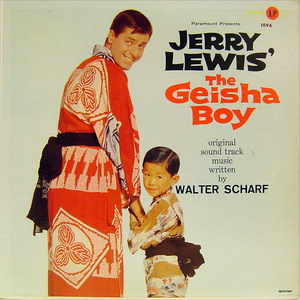
If you've ever spent more than twelve minutes with lefty activists or critical academics, you will notice that one word somehow manages to pop up as a way to describe a variety of things, people, phenomena, and social issues: "Problematic." Everything from homophobia to movie posters to legislation gets described in this way, to the detriment I think of the speaker, because this word is so grossly imprecise. I often get confused about the meaning of this word, and people often misread my use of it, creating a general state of confusion and misinterpretation that doesn't work towards anyone benefit.So today, I wanted to pause for a second today to reflect on this overused and imprecise word that so many of us find so appealing. What do I mean by it? What do I read others as meaning by it? And how might we find other ways of saying what we mean when we use it so that people understand us a bit better? I'll use the image above -- which came up as an early Google Images result when searching for "problematic" -- as a reference point to describe how these different meanings would result in different responses to the image.
In my experience, there are two broad uses of this word that relate to the differences I see in who's using them: Academics and activists. Let's begin with that activist-y definition, which I take to be the more common usage of the word (at least in my experience). For activists, I understand their intention when labeling something as problematic as a way to say that these things are generally bad and should be avoided -- and more specifically, evidence of oppressive systems such as racism, sexism, and homophobia. Thus, there is a moral valence here: Problematic things are morally bad, unjust, and something that should illicit shame in its maker, something that is perceived as grossly incompatible with "social justice" (another highly vague term, as is indicated by my critique yesterday. But I digress).
Thus, in this frame, if I refer to the image above as "problematic," I probably mean to say that it's blatantly racist for the way it represents Asian men in the role of women, feminizing them categorically while buttressing white male masculinity by way of making the white man look strong, tall, and manly in comparison with the small "geisha boy" dressed in traditional women's garbs. In more plain language, I'd also probably say that Jerry Lewis is a racist asshole and that he should be ashamed of being involved with its production. Thus, problematic often becomes a nicer way to call a person a jerk and to spank them verbally.
But there is another understanding of the word, which I take to be closer to the word's original meaning (though I make no claim that "original" meanings are the "right" meanings). I say this as a result of the definitions available online. From Merriam-Webster:
1 a : posing a problem : difficult to solve or decide b : not definite or settled : uncertainc : open to question or debate : questionable 2 : expressing or supporting a possibility
Thus, in this frame, to call something problematic is a bit like labeling it a thought-puzzle, as begging or requiring inquiry and explanation. This is much closer to the definition I think most academics are referring to when they invoke "problematic." I refer here to Chrys Ingraham's rather elegant explanation from her essay "The Heterosexual Imaginary," where she attempts to explain her goal as a feminist scholar trying to unpack the ways in which heteronormativity functions and is reproduced. Relying on Althusser's conception of "problematic," she argues:
"To examine the ways in which feminist sociology reproduces the heterosexual imaginary requires a theoretical framework capable of investigating the interests and assumptions embedded within any social text or practice. This mode of inquiry would make visible the frames of intelligibility or the 'permitted' meanings in constructions of gender and heterosexuality. More than this, it would connect heterosexuality and interests to a problematic. As Althusser has argued, 'A word or concept cannot be considered in isolation; it only exists in the theoretical or ideological framework in which it is used: its problematic' (1982:253). To determine a text's problematic is to reveal another logic circulating beneath the surface. It appears as the answer to questions left unasked. It is not that which is left unsaid or unaccounted for, but that which the text assumes and does not speak. What is required, then, is a process of analysis capable of inquiring into the power relations organizing the allowed as well as the disallowed meanings in an effort to expose the artificiality of the theories and ideologies organizing the use of particular concepts." (p. 6, link)
In this conception of "problematic," the word here is meant to describe the "theoretical or ideological framework" in which a word or a "text" (an academic term that really refers to any kind of written word but also images and media that can be subjected to a critical interpretation) exists. She uses it here notably as a noun -- not an adjective. This "context" could be include a variety of approaches that relate to academic disciplinary practices and methods for analysis, such as a historical approach -- how did the historical moment in which the text was produced impact the symbols and meanings embedded within it -- or perhaps from a sociological perspective reading transcripts of interviews to understand how it is imbued with cultural narratives that give us some insight into the socio-cultural context in which they live.
Thus, relying on this conception of "problematic," morality is not called into question. Indeed, many scholars would argue against a universal conception of morality that could be imposed from the outside on a particular text, phenomenon, or practice. Thus, within this framework, calling this image above "problematic" would instead imply that there are various forms of representation simultaneously being invoked that require a bit of critical analysis. Thus, one might attempt to compare this image to historical representations of Japanese men (and East Asian men more broadly) that enabled this particular image to be legible or understandable to its audience. In order for this text to be meaningful as a marketing tool, its producers has to expect that -- to at least some degree -- people seeing it would be able understand how to interpret the boy's clothes, the term "geisha," and the larger social and historical relations between the Japanese and Americans.
Thus, to describe it as "problematic" in this sense would not necessarily entail it's condemnation -- or to imply that you think Jerry Lewis is a jerk (although they may well think so). In and of itself, the text cannot be morally "bad." Rather, it is the ways in which it relies on and is produced through various systems of power and social relations that are deserving of critical attention. Connecting this image to this socio-cultural and historical context helps reveal why we would want to describe it as "racist" today - even though it may not have been readily understood as such at the time. In this way, understanding something as "problematic" is to demand attention to this context -- that dwelling simply on the image as if it were in a vacuum is not productive analytically.
I don't think either are particularly "better," per se. The first version is motivated by various political agendas -- to use problematic in this sense is to call out practices or ideas that do indeed reinforce pervasive systems of injustice like racism, sexism and homophobia. I don't mean to imply that this isn't a worthwhile goal. But by posing it alongside an entirely different conception used often by academics, I want to just note how there are this disparate meanings in use that make understanding those who invoke it difficult. So I think we need to try to find a new word - or just explain what we mean when we use it. I'm constantly confused when people describe something as "problematic" - it seems to be a kind of catch-all colloquialism that people are expected to generally understand but not perfectly. So next time you want to call Jerry Lewis an asshole, just do it! No need to beat around the bush.
Anyhow, that's my totally academic and asinine indulgence for the week. If anyone is still reading, I'd love to hear thoughts!
xoxo
T
Show Me Your TeethBy on February 2, 2010 7:58 AM | No Comments
A slightly strange / pseudo-pornographic video made to the tune of Lady GaGa's "Teeth" and featuring gay vampires and leather. Pretty sexy!
I can't find the story behind the video. I guess it's just a well-done fan flick!
Does Justice = Loving Yourself? Thoughts From the Forum on Black Gay MenBy on February 1, 2010 12:44 PM | No Comments
I was overwhelmed by the turnout last Friday night for the forum in Chicago, "What is justice for the black gay man?" I'm not particularly good at estimating crowd size, but the room was very spacious and it was standing room only. In attendance was a regular who's-who of Black gay men and their allies in Chicago, including a few local politicians and government officials. In this regard, I want to applaud the organizers of the event for bringing together a fabulous group of Black gay men and their allies for a discussion devoted to some rather difficult topics.
I was excited to hear the panelists, of course -- particularly E Patrick Johnson and Keith Boykin, both of which have done some pretty groundbreaking work in their respective fields for advocating for LGBT issues broadly and for Black gay men specifically. Johnson's performance work, "Pouring Tea," I particularly love for the way it brings to life an extremely diverse set of experiences of Black gay (or otherwise same-gender-loving) men living and thriving in the South. Keith's critical work on the down low was also I think an incredibly important invervention into the stigmatizing discourses around this issue that became hyperbolic when writers like J. L. King (who went on Oprah to spread his pathologizing understanding of the phenomena) and Benoit Denizet-Lewis, who wrote a grossly distorted piece for the New York Times. Denizet-Lewis has actually made something of a career of pathologizing gay men, which probably explains mainstream media's love for his alleged "exposes."
So needless to say, I was eager to hear these thinker's thoughts about how best to advocate for and understand the experiences of Black gay men. I expected to hear about social justice rooted in a denial of access to social benefits, racism, pathologizing discourses about Black MSM's sexualities and behaviors, an HIV epidemic that is crippling agencies working with these populations and disproportionately infecting Black men, and an interwoven network of stigmas that makes daily life for these communities trying at best, and unbearable at worst. Alongside these problems, I also wanted to hear about the ways in which many Black gay men are surviving and even thriving despite these obstacles.
I didn't really hear either of these things. Instead, I was shocked and nearly appalled when it became clear that justice for the speakers was primarily about "loving yourself" and "being true to who you are." Indeed, the problem that was posited as the most trying for Black gay men was their own internalized racism and homophobia, a kind of pathologizing and psychologizing approach to social injustice that I found utterly baffling. No, it wasn't pervasive systems of racism, homophobia, sissyphobia, and pozphobia that are systematically embedded in social institutions and cultures that should be the focus of social justice movements -- but rather the internal psyches and emotions of Black gay men themselves.
This is not far from the latest self-help craze for Oprah to latch onto, "The Secret," which proposes that to succeed in life we merely need to imagine ourselves as successful, wish for that to be true, and think positively. If we aren't rich, then it's our fault for not wanting to be rich. If we don't have health care, then it's our fault for not wanting to become insured. This isn't just offensive, it's downright manipulative for the way that it seduces people into believing that the onus of achieving loosely defined "success" in life falls entirely on individuals. Nevermind the vast libraries of scholarship that illustrate the ways in which various forms of social inequality make achieving these markers of success difficult if not impossible for many social groups -- particularly those born into poverty but also those marked by certain socially ascribed characteristics such as race, gender, and sexuality. Under this individualistic / rational framework, you are a free agent whose choices in life are the only factor that will influence whether or not you grow up to be a CEO or a garbage collector. As a sociologist, this is the kind of ignorant, distorted, and highly conservative perspective on the world that erases the foundations for a politics of social justice.
I'd call attention here to two comments from the audience after the short presentations by the panelists that I think help illustrate the underlying politics (or lack thereof) in their comments. First, there was a question from a self-identified "successful" Black gay men near the front of the room who noted that he loved himself, his life, and his partner just fine -- but his self-love, well-paying job, and house didn't translate into his ability to formally marry his partner of many years. Thus, I read him as trying to point out the ridiculousness of the panelists' claims about what justice should mean for Black gay men -- it cannot be framed just in the terms of psedo-scientific self-help jargon, but rather must first and foremost recognize the structural and social injustices that make that self-love difficult to achieve. The self-love is the OUTCOME of justice, not the root CAUSE.
Second, a man near me later stood up to ask why it was that the panelists were defining homophobia as a kind of psychological problem, rather than as a pervasive social system of power relations that is embedded in institutions and cultures. Heterosexism, he posited, would perhaps be a better way to situate the claims for justice that could foment a Black gay politics. "No, no" the panelists said (I'm paraphrasing), "I don't think that's how we understand homophobia." But it was clear that this was EXACTLY how they were positing homophobia and more broadly the social justice politics that should stem from that form of social inequality -- as I hope is made clear by my (distilled) description of their talks above.
Don't get me wrong, I hope that Black gay men are happy. That's a good thing. But you just don't build a social justice politics based on psychological concepts like internalized homophobia and depression. That's the building blocks for a public health intervention, which increasingly are supplanting actual social justice movements for gay men in general -- Black, white, or otherwise. It's perhaps not a coincidence that these efforts are funded by state agencies that perpetuate these very injustices. The disease or problem in this model becomes not the system and the dramatic injustices it enables, but the various medical problems experiences by minority groups like "self-destructive behaviors" and "low self-esteem." It is precisely though this pathologizing reconfiguration that political movements become neutered and inequality gets perpetuated, reproduced, and made more insidious because these injustices come backed by medical authorities with so-called "evidence."
Let's take care not to fall victim to these alluring models for social change. They may make us feel warm and cuddly, but that isn't going to mean a damn when said happy person gets denied health insurance because he's HIV-positive. Or when he gets fired from his job because a co-worker saw him kissing his boyfriend at a local nightclub. Let's see how happy they are after that.