June 2009 Archives
Frameline 33: "Straightlaced: How Gender's Got Us All Tied Up"By on June 28, 2009 2:48 AM | 3 Comments
"STRAIGHTLACED: HOW GENDER GOT US ALL TIED UP"
Director: Debra Chasnoff
Trevor's Rating: 5 / 5 Stars
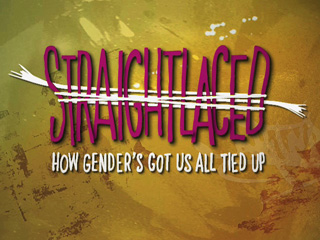
I have a confession: I broke down crying in the middle of this screening. This wonderful new feature documentary from Academy Award winning director Debra Chasnoff (from It's Elementary fame) features a variety of youth's perspectives on the impact of gender roles on men, women, and everyone in between.
Radical / separatist feminists have for far too long refused to incorporate an analysis of men's lives into their analysis and politics. Men, they would say, are studied in every other department on campus. Why give their lives any more attention than it already has? I believe that their brand of feminism ultimately ended up becoming the butt of jokes because of this refusal -- because men were made out to be the enemy, and because a feminist analysis gave men few tools to understand how their own gender impeded their ability to live life fully. Old school feminism made it seem like it was always easy to be a man and always difficult to be a woman. This was never true.
Straightlaced presents a new kind of analysis of gender that drops the insistence that it is women who only matter when we talk about gender. In this fabulous piece, we hear from all kinds of young people with a variety of gender presentations -- and a variety of racial and ethnic backgrounds (which, as we all know, work with gender to produce variations on similar themes). It takes young people's voices and experiences seriously, which is certainly where it draws its strength. It avoids jargon. It's matter of fact. And it's incredibly powerful.
As I mentioned at the start, I had a mini-breakdown halfway through the film when they tell the story of a flamboyant young boy who committed suicide. His friends and neighbors were interviewed while planting a memorial garden, and they had colorfully painted picnic tables with messages of tolerance and acceptance. When they panned to a table painted "Hate Free Zone" with a heart around it, the waterworks started coming. I couldn't hold back. The pain of growing up as a sissy boy in an intolerant culture flooded me with emotion. In different circumstances, would that have been my story?
The tears didn't stop there. Hearing so many young people speak openly and frankly about the way that gender restricts their actions, emotions, friendships, and sexualities kept my cheeks damp for most of the film. I can't recommend this film more -- particularly for educators who can use this film as a resource in the classroom. Once released on DVD, Groundspark (the film's producers) will I believe make available a set of classroom resources -- which would be a wonderful asset to educators.
This is 21st century feminism, folks. In fact, we need a new word for this kind of analysis. Feminism doesn't cut it. (Gender studies, perhaps, though it's a bit bland I think.) But whatever the terminology, this is the direction we need to moving in collectively as folks invested in reworking and expanding cultural constructions of gender and sexuality.
Here's the trailer:
HRC Ad in Castro Politically DefacedBy on June 27, 2009 9:37 PM | 2 Comments
So I was walking through the Castro when I noticed this (click to embiggen):

Here's a zoom of the quote:

HRC: Not popular.
Frameline 33: "Transtastic!"By on June 26, 2009 2:26 PM | 1 Comment
Another collection of shorts! This time, it's a collection of short films that all deal with trans issues. "Transtastic!" is an annual series -- last year, my friend Ethan debuted his film dealing with trans health care issues (see my review of the session here). This year, I signed up because I knew me and my friends would go. I didn't take care to look at the selection of shorts -- in hindsight, I should have. This was perhaps the worst collection of films -- barring one truly outstanding short -- I have seen in recent memory. There are some par-for-the-course pieces, but a number of *disastrous* films made for a pretty unhappy experience. I promised my friend Jackson I wouldn't give anything less than one star because the films all featured trannies. Keep that in mind! lol
"AMONG COLORS AND RAZORS"
Director: Catarina Accioly, Ibere Carvalmo
Trevor's Rating: 3.5 / 5 Stars

This was a cute and colorful Brazillian film following the budding romance of a citybus fare collector and a tall, gangly hairdresser by the name of Antony. He invites her into the salon for a free haircut, and the rest, as they say, is history. It's charming, but the editing is a bit choppy and disjointed, creating a kind of jarring viewing experience. The color here is wonderful though, as is the celluloid deliciousness of the film (it was shot with 35mm). And Antony and Esperança are delightful and a treat to watch. It's a fun film, despite a few technical flaws.
You can watch the Portuguese trailer here:
"BEING LISA"
Director: Gene Hosington, Becca Louisell
Trevor's Rating: 1 / 5 Stars

Hands down, one of the worst and most trite films I've seen in my life. Seriously bad. I don't even know what to say. It had all the cliches you could possibly imagine in a film dealing with a transwoman. Every. Single. One. Lisa goes on a date with Jason. It goes well. He invites her to friend's birthday party. Friend freaks out when he finds out she's trans, and sexually harrasses her in the bathroom. She runs out (in slow motion, no less), and Jason runs after her. This film felt straight out of a 1985 PSA. Sigh.
"BIG DEAL"
Director: Hilary Goldberg
Trevor's Rating: 3 / 5 Stars

Katastrophe is a trans music rapper / artist here in the Bay Area who's well known around town for his hip-hop beats. "Big Deal" has a touch of electro-trip-hop thrown in for spunk, and the song is generally catchy. The video itself is cute, a retelling of Andy Warhol's attempted murder back in the 1960s, with Katastrophe playing Warhol with aplomb. It's cuteness comes complete with glitter blood. An extra half-star for that.
You can watch the whole thing here:
"BLINK"
Director: Silas Howard
Trevor's Rating: 4 / 5 Stars

Blink is a tension-filled short that gives us a glimpse into a first crush. It was definitely one of the more polished entries here in Transtastic!, and the efforts paid off. It was sexy, dark, and creepy. Sexual tension drips from the film, complete with a skinhead brother intensely greasing up and cleaning his gun. Amazing stuff. But despite it's high-quality production value, the story felt a bit underdeveloped. But for 11 minutes, I guess that's part of the package!
"KADEN LATER"
Director: Harriet Storm
Trevor's Rating: 5 / 5 Stars
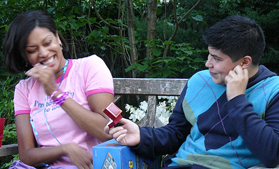
Hands down, the best documentary short I've seen in years. This film is so incredibly fabulous, I'm not even sure where to begin. Here we get a glimpse into the life of Kaden and his partner Monika. Kaden is struggling with trying to maintain a genderfuck presentation while also desiring to take testosterone. Monika wants a "normal" life in the suburbs. There's wonderful tensions and contradictions here, which is truly the best part. Too often we get an edited, "messaged" version of people's lives in documentaries without any of the doubts or anxieties that come with living a queer life. But these tensions are on full display here, and it's beautiful. This film would be a wonderful asset as an "educational" documentary for students RE: gender / trans issues, and I intend to get my hands on it for that reason. It's a real treat.
"L1FE" & "TELL ME THE..."
Directors: Aarin Burch ("L1fe"), Bobby Poirier ("Tell me the...")
Trevor's Rating: 1.5 / 5 Stars
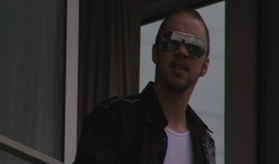
Whoa! Backstreet's back, alright! Joshua Klipp is a trans performing artist who has singlehandedly resurrected 1990s boyband pop all by his lonesome. I mean, it's kind of amazing for the way he brashly goes for cheese without a hint of irony or embrassment. But there's got to be a limit! In any case, Klipp is a hottie and fun to look at. But I left my Backstreet Boys days behind me. Unfortunately for him, so did the rest of America.
Just watch for yourself:
"MICHELLE'S FIRST WEDDING IN A DRESS"
Director: Ann von Hagemann
Trevor's Rating: 1 / 5 Stars

Director Ann von Hagemann told the audience before the screening that she "just wanted everyone to see my wife the way I do!" Clearly, Ann loves her wife very much, and it shows here. But as a cinematic endeavor, the film is, well, kind of terrible. Not to mention the absolute horror of the cliched narratives that keep spewing from her wife's mouth (e.g "Most trans people aren't lucky and never find love") and the suckiness of her judgmental politics (e.g. "I'm so glad I'm not one of those spikey haired, freaky trannies"). Jesus. Well we see her, Ann! I'm just not sure we all share your love.
"TRANSPROOFED"
Director: Andrea James
Trevor's Rating: 3.5 / 5 Stars

I love Calpernia Addams, and she certainly shines here as the star of a movie about a transwoman anxious about going on a date with a straight man. She calls her friend and mentor to help her "transproof" her apartment, which ends up meaning removing all traces of color, happiness, and fun from the space. What's left after their frenzy is a drab, beige depressingness. This is a really cute film, and as I said I have a lot of love for Addams. But again I think we get a lackluster and perhaps a bit melodramatic ending here that just doesn't do the film justice.
"TRANSPLOITATION"
Director: Rachel Matlow
Trevor's Rating: 2.5 / 5 Stars

This film is an attempt to mock the ways that cinema has treated trans subjects in often exploitative ways. We follow Kaleb -- who bears at times an eery resemblance to Perez Hilton -- who laments the various ways he's exploited in our culture. The film's funniest moment is probably him at the grocery store, complaining against the transgender harassment he finds evidenced by the "No Trans Fat" trend. Very cute. But the film never makes clear who the targets of the critique are. Trans people? Trans filmmakers? Non-trans filmmakers? Is the underlying claim that trans lives really aren't so hard at all? Or is the claim that trans hardships have simply been exaggerated for filmmakers gain? None of these questions are ever answered clearly, and that makes the film's message ambiguously dangerous. You could imagine some folks walking away thinking trans people's complaints are a wholesale joke. But I'm sure that's not what the filmmaker attempted.
By on June 26, 2009 1:51 PM | No Comments
"LIGHT GRADIENT"
Director: Jan Kruger
Trevor's Rating: 1.5 / 5 Stars
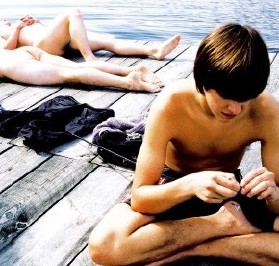
This could have been the perfect easy, breezy summer gay flick! The setting was magnificent: Rural Germany, Brandenburg to be precise. But from the moment this film started I could tell it was going to be a disaster. Shoddy camerawork, generic autofocus, and pixellated images due to subpar equipment all work together to poison this film from ever excelling past the made-for-TV level. From the start, I kept screaming in my head to "BACK UP!" The shots were always so close-up and cramped, it made me uncomfortable in my seat. I guess this decision was the result of a crappy camera that couldn't get much detail from far-away, but it made for a very unpleasant viewing experience.
Light Gradient's story is a simple recipe that's been attempted dozens of times. The film chronicles the journeys of Johann and Robin as they travel the countryside together. I expected some awkward rolls in the hay, and they were certainly present. But mostly we got a weird contradiction between general freedom with full frontal male nudity while showering, but when the sex actually got started the camera panned over to farm animals. WTF? With a film so bad, a hot sex scene could have at least made it worth my time. Alas, there was to be no sexytime on film.
The boys -- played by Sebastian Schlecht (Johann) and Eric Golub (Robin) -- are cute, but in a generic kind of way. They never find their stride in front of the camera, and even when making out they lack any kind of screen presence. They seemed to be straight out of bad German porn -- you know, the kind with the dubbed moaning and generically cute boys. That's this pair. Perhaps it's the result of bad direction, but the two are the thespian equivalent of a painfully flat note.
But halfway or so through the film, they wander onto a farm in search of food. We're introduced to Henri, the young boy who lives on the farm. There's an incredibly contrived scene in which Henri -- a beautiful waif of a boy -- holds up Robin and Johann at gunpoint to prevent the two from running away. "Now," I thought, "we're going to see some action!" It was totally the plot of a thousand terrible gay porn flicks from Eastern Europe. "Oh, please! Don't make me do that!" Alas, my thirst for a threeway was never quenched.
But I must say here that Denis Alevi, who plays Henri, is truly beautiful. Unlike Schlecht and Golub, who never shined on camera, Alevi's face comes to life on screen. It's not that Schlect and Golub aren't sexy -- they're very much so -- but Alevi just translates on film. He's got the beautiful hair, the olive-toned skin, and the heart-shaped face that all work together to make him quite appealing. And while his first moments on film are a total disaster, he warms up quickly and finds his stride. I'm not saying his performance changed my life, but in relation to the rest of the film, he was a glimmer of hope.
All in all, I have to say this was a real lemon of a film. Which was disappointing, given the fact that a few reworked elements could have really changed its fate.
Everywhere I go, every smile I seeBy on June 26, 2009 8:42 AM | No Comments
I am so sad that Michael Jackson is dead! Late last night, some friends and I walked to campus and held a candlelight vigil listening to "Together Again."
As I woke up early this morning in the bed of a man I like to call Betsy Ross, Good Morning America rehashed the many skeletons littering MJ's closet. Indeed, in the words of one Facebook status on my newsfeed, he "was dead a long time ago." CBS could not help but replay Diane Sawyer's 1995 interview with Michael Jackson and Lisa Marie Presley (who conveniently married in the heyday of Michael's legal troubles) discussing his alleged pedophilic debauchery with pubescent boys.
I think it is disgusting the extent to which Michael Jackson was stigmatized after these allegations hit the press. So let's just set the record straight: if I were twelve and Michael Jackson built me Neverland, I would totally consent to his sexual advances.
Frameline 33: "Swiss Treats"By on June 25, 2009 5:07 PM | No Comments
Continuing my Frameline coverage, I attended a series of shorts yesterday all hailing from Switzerland. Who knew such a small country could generate such a wonderful assortment of queer cinema? This is a fabulous grouping of films (with one glaring exception), with most of the films beautifully filmed and well constructed. The title was no mistake, this collection of shorts was a real treat!
"14h05"
Director: Nasha Gagnebin
Trevor's Rating: 3 / 5 Stars
14h05 is a powerful, very short (clocking in at 6 minutes) film that gives us a brief vignette into the anxieties of new parenthood for a gay couple, Alex and Julien, about to adopt a child. Julien is having doubts about his new role as daddy, but Alex does his best to quell his jitters as they head to the airport to pick up their baby. This film immediately raises questions about transnational adoption that are not explored, with a woman in traditional Indian garb deplaning to bring the couple their new child. I'm guessing they adopted an Indian baby because it's cheaper than adopting in Switzerland, but these intricacies are left untouched. The film left me feeling a bit uneasy because of the way these questions and problematics were left wholly unexplored, but for a six minute adventure it was a strong piece.
"510 METERS ABOVE SEA LEVEL"
Director: Kerstin Polte
Trevor's Rating: 4.5 / 5 Stars

This short film (16 min.) packs a lot of punch! It has all the magic I've come to expect from European cinema, artfully taking time to indulge in the wonder of the world around us and the quirks that make life worth living. Here we find Simone stuck in an airport in Switzerland, trying to get on a flight to attend her father's funeral. Planes have been grounded because of the weather, so Simone desperately tries to find a way to get to the funeral. When she can't find a way out, she runs into a mysterious woman who may or may not be living at the airport. The woman says she's "waiting," but for what or whom we're not told. These women share a wonderous night together, finding magic in the nooks and crannies of the otherwise drab and sterile airport. It's a great film. Delicious, light, and endearing.
And the best part? You can watch the entire thing right now! Here:
"COMME UNE LETTRE A LA POSTE"
Director: Filippo Filliger
Trevor's Rating: 4 / 5 Stars

A real delight! Comme une lettre a la poste is a whimsical short that tells the story of a graduate student who suspects his academic adviser has been ripping off his own work. The only problem: he can't prove it and his professor has no interest in helping him graduate! Frustrated, Franco flips through his professor's briefcase where he finds the card of a local professional Dom. Upon revealing this newfound information to his co-workers, they scheme to gather evidence that the professor had indeed been paying visits to the local sex worker and use it to blackmail him into letting Franco graduate. The ensuing antics are totally endearing and manage to make S&M play humorous without mocking or demeaning its practitioners (a careful line, indeed). The title is a French expression, meaning to do something very easily, and indeed Franco winds up getting what he wants -- but not entirely the way he expected. If you can get your hands on it, you should!
"DANCING TO HAPPINESS"
Director: Barbara Seixwe
Trevor's Rating: 5 / 5 Stars

This is a nearly perfect short. It has everything you'd want. It's cute, never boring, and totally endearing. Anna is a cleaning lady at a high-power office suite. Helen (a *fierce* Marianne Hamre) is a high-power broker. Fate unites them for a salsa class, with Helen awkwardly and robotically moving through the steps, and Anna bringing a bit of zest and charm to the dancerfloor. They're an adorable matchup, and the film is oozing with feel-good-goodness.
"EASY TIGER"
Director: Alkmini Boura
Trevor's Rating: 3.5 / 5 Stars

A strange and somewhat dark drama brings to life the story of a mysterious lady, Lia, who keeps returning to a copy shop to inquire if she's missed any messages. Elena, the copy shop clerk, is bemused by Lia's bizarre antics, until she wakes up from the monotony of her job to find Lia robbing the place blind. A chase ensues, and while Elena manages to tackle Lia to the ground, they of course enjoy their bodies pressed against each other a bit too much for either of them to be upset. It's a charming, if at times strange film. I thought it got a bit sloppy towards the end, with a strange ending that didn't quite live up to the film's possibilities. But it's a nice entry, for sure.
"EYE AND AXIS"
Directors: Cecilia Barriga, Claudia Lorenz
Trevor's Rating: 0 / 5 Stars

This experimental short has graduate school psychobabble written all over it. A pelican flying over the horizon. Images of gurgling water interspersed with images of a nude woman. Spare me. Film critics might say that I just "don't get it," but for give more feeling like this film is a classic example of "postmodern" tripe. I give it exactly zero stars.
"FIFTH FUGUE"
Directors: Nasha Gagnebin
Trevor's Rating: 2 / 5 Stars

Four minutes long, this is quite a short short! It attempts to tell the story of a young twink who takes piano lessons from an older man, and it ends up with a series of fantasies of the two fucking. But despite the potential for sexy deliciousness, it just didn't reel me in.
"VANDALEN"
Directors: Simon Steuri
Trevor's Rating: 5 / 5 Stars

Vandals is a dark but beautifully and carefully shot story of Sebastian and Johannes, two incredibly sexy young graffiti artists who are embroiled in a lusty affair. Tension sparks when one wants more than the other thinks he's ready to offer -- namely, a public recognition of their secret romance. It's a truly wonderful film, managing just the right amount of attention to detail without coming across as artificial or trite. If you can get your paws on this film, you really should. If you speak Swiss/German, you can find a trailer for the film here.
Frameline 33: "Global Queers"By on June 25, 2009 4:04 PM | No Comments
Here I go! I'm kicking off my film reviews of the 33rd Annual Frameline Film Festival here in sunny San Francisco! For my first film, I attended a screening of a set of shorts from filmmakers across the world. Topically, they're a very interesting and compelling grouping, though from a cinematography point of view the films were at times lackluster. But I'm glad I attended! You'll see why...
"BUSTED"
Director: Poh Si Teng
Trevor's Rating: 3.5 / 5 Stars

Busted (or, Pecah Lobang) documents the experiences of mak nyah (male to female transgender) women living in Malaysia, and their troubles with Shariah law that forbids crossdressing. Curiously, they allowed sex change operations for many years in the 70s and 80s, but the Islamic Council issued a fatwa in 1983 outlawing the procedures, putting an end to the surgeries and also making it impossible for trans people in Malaysia to change their gender on their Identity Cards. This of course poses all sorts of problems for transfolks, most notably securing reliable employment. The film hits on a number of issues, and is useful for folks who are interested in trans legal issues, Malaysia, or Islam. In particular, the film raises very interesting questions about the varying ways that Shariah gets enforced in different countries -- sex change operations are perfectly legal in Iran (see my review of last year's Be Like Others). But while the film was politically poignant, I was left with questions. Most notably, are there transgender men in Malaysia? Is their plight similar or different? It wasn't clear. But on the whole, this film was a gem for the way it documents the stories of unheard voices.
Here's a clip. You can purchase the film here.
"KRUDAS"
Director: Opie Boero-Imwinkelried
Trevor's Rating: 2 / 5 Stars

Krudas is a colorful documentary featuring a Cuban lesbian hip-hop duo, who also happen to be lovers. It's a fascinating topic, ripe for analysis for the ways that the group eloquently attack patriarchal and homophobic assumptions about what it means to be a hip-hop artist, what it means to be a Cuban, and what it means to be a woman. Unfortunately, I didn't think the filmmaker did the pair justice. The film lacks a coherent storyline, and wanders aimlessly from person to person without really developing any particular idea to fruition. Instead, you get a random array of complicated ideas that makes for a very frustrating watch. I wanted this film to be so good! But it wasn't. It's a great topic, and the artists deserve praise. But the film feels sloppy and almost incoherent. Nevertheless, Frameline picked up the film for distribution, and you can purchase it here.
"QUEER SARAJEVO FESTIVAL 2008"
Directors: Cazim Dervisevic, Masa Hilcisin
Trevor's Rating: 3.5 / 5 Stars
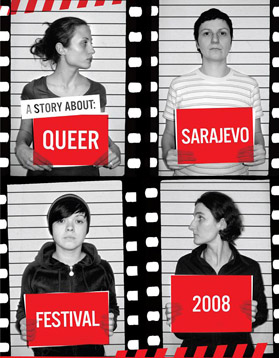
This short film is a compelling take on Sarajevo activists' efforts to jumpstart a queer film festival in a country (Bosnia and Herzegovina) not known for being particularly queer-friendly. I was struck immediately by the radical rhetoric of the activists organizing the festival -- the festival's website claims the event is a "multimedia, five-day event intended to disrupt, redefine, transgress, fulfill and affirm sex, gender, sexual orientation, sexual identities, gender identities, gender expression, and all other concepts the meaning of which is assumed and accepted as absolute truth." Organizers planned for the festival to take place during Ramadan, which caused quite a controversy among religious conservatives who are shown spouting homophobic vile throughout the film. The festival appeared to be getting off to a fabulous start, with 400 or so people attending the art show that kicked things off. But slowly a protesting crowd begins to gather outside the venue, and they grow increasingly violent and angry. (I think they were shown shouting something like, "FAGGOTS DIE! WE WILL FUCK YOUR MOTHERS' CUNTS.") Eventually all hell breaks loose, with the protesters beating film festival attendees and the police doing little to protect them. One of the guest judges, Andrejs Visockis, was attacked and nearly blinded by the mob (find his account of the night on his blog, here). It's a fabulous window into a homophobic culture that may seem distant or altogether archaic to American viewers, but it's a healthy reminder that violent homophobia is not a thing of the past. The film at times strays, indulging in tangents that weaken its narrative construction. But its story is incredibly compelling, and a must-see for anyone invested in global human rights for queers. You can read about the festival on the organizers' website here.
"WELCOME TO MY QUEER BOOKSTORE"
Director: Larry Tung
Trevor's Rating: 4.5 / 5 Stars

I LOVED this movie! What a divine and fabulous short film. It's a simple idea: Make a short film about the power of the one and only queer bookstore in the Chinese-speaking world, and document its sociological impact in a Taiwanese community where there are few resources for queers. It's a simple idea with a huge payoff. The hero of this film is Gin Gin's Bookstore's owner, "JJ" Lai Jeng-Jer, who was sued by conservatives for distribution of "obscene" material. Taiwanese activists used the lawsuit to their advantage, putting together a fundraiser that raised more than twice the money needed to pay the fines levied against the bookstore. Throughout the film, JJ gleefully walks through his store, telling viewers about the significance of all the various items he carries in his store. I have to say, I was so thrilled when JJ picked up a prostate massager and sung its glories for giving users new ways to experience anal pleasure. He's amazing. But the waterworks really flowed when he stood beside a section of sports bras, eloquently speaking about how important sports bras are for butch lesbians in Taiwan who use them to bind their breasts. These weren't just goods for sale, these were politics for JJ. God bless him. And God bless this film!
Call for questionsBy on June 25, 2009 2:17 PM | No Comments
Dear army of ex-lovers,
The next installment of "The View from the Bottom" quickly approaches! Please submit your most pressing concerns and burning questions to theviewfromthebottom@trevorhoppe.com.
Love,
Scott
By on June 25, 2009 2:39 AM | 1 Comment
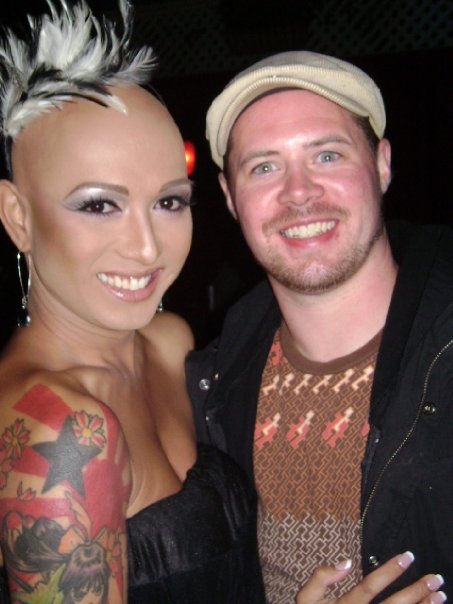
After picking Trevor up from the airport last night, we drove down to SOMA for a party called Chaser. The party is thrown by a local cunty queen, Monistat, and is billed as a party for trannies.
The biggest draw for me was an appearance by Ongina from RuPaul's Drag Race!
For those who aren't familiar, RuPaul's Drag Race was on the Logo channel and was an America's Next top Model meets Project Runway style reality show that featured drag queens competing for the title of next drag super star.
Ongina was my favorite contestant (even though she didn't win.) She's known for her gender-fuck style of drag, as well as her tearful admission of her HIV status.
She was a pleasure to talk to and I'll be damned if she didn't have the softest skin I've ever touched!
Happy Pride!
"How do I keep things casual with e tricks who want more without hurting their feelings?"By on June 24, 2009 11:41 AM | 9 Comments | 1 TrackBack

Welcome to the first episode of The View from the Bottom, the vlog about gay male health and sexuality as told from the perspective of two bottomless bottoms. This week, Scott and Trevor discuss nairing vs. waxing, the pros and cons of douching, strategies for keeping casual sex casual, and whether or not it's weird to not like getting a blowjob.
E-mail your questions for the next episode to: theviewfromthebottom at trevorhoppe.com (replace the "at" with @ -- clearly)!!!
On SF Housing CostsBy on June 23, 2009 4:00 PM | No Comments
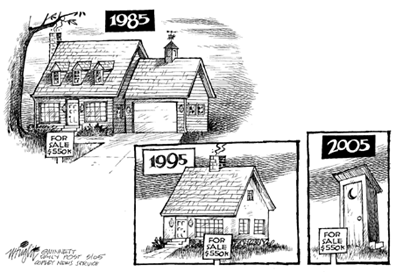
Speaking of San Francisco, here's a telltale letter to the Bay Area Reporter editor from a reader who left San Francisco to move back to Utah because of the outrageous cost of housing:
SF housing too expensiveI miss San Francisco with all my heart.
My partner of 20 years and I moved to San Francisco in 1990 on Cumberland Street. It was a top floor with two large bedrooms and a huge living room and kitchen and dining area. We had a fantastic view of all the lovely homes on the hill looking north.
When we moved in we were paying $1,100 per month. When we moved in 2004 we were paying only $1,300 per month and that included parking garage and laundry facility. When we moved out the rent went up to $3,500 per month.
It was quiet and perfect, except we were in our late 40s and wanted a home and a yard and a pet dog. But houses were outrageously overpriced.
That made us move back to Salt Lake City, but my heart is still there in San Francisco and I will always call it my home.
We now could never return to San Francisco if we ever wanted to.
When we left San Francisco there were new condo buildings sitting empty because of the economy and the costs. Condos on the wharf were going for $700,000 and tiny and empty.
Here large two-bedroom condos go for about $45,000 to $125,000. But then you have to put up with the gay hating mongrels called Mormons and the freezing winters.
I feel that San Francisco has let greed run us gays out of the city to never return, except for those who can afford it.
John Benoit
Holladay, Utah
When I moved to San Francisco in 2005, me and my friend Troy were lucky enough to snag a 2-br in the Castro (17th / Noe) for $1700. That was a steal. My instincts tell me the market value today of that apartment is upwards of $3000 a month. My friend -- who still lives in that apartment -- called me last week to tell me that the landlord was having it appraised. Danger 5000.
San Francisco, Here I Come!By on June 23, 2009 7:12 AM | No Comments
Today I fly to San Francisco for PRIDE! I can't effing wait. My schedule is packed with 11 delicious Frameline films; Juanita More's annual PRIDE party; and a host of wonderful dates with some fabulous friends. I can't wait to see all my friends in the Gay Bay!
Blogging while I'm gone will largely be slow from me -- minus film reviews for those Frameline movies. I'm going to do my best to review all 11 of them here. Hopefully Scott, Daniel, Rostom, and Jackson will have a few things to say while I'm gone. Though I'm staying with Jackson in SF, so he'll have his hands full with my antics!
Anywho. Hope your week is as amazing as I know mine will be.
xoxo
T
Ben Goldacre: Drugs Ain't So BadBy on June 22, 2009 11:04 PM | No Comments
Ben Goldacre, author of "Bad Science," takes on the scientific evidence against drugs and the largely punitive policies meant to control them, and (no surprise) finds that policies are decidedly not evidence-driven. For instance, RE: cocaine (note the bolded part about the potential harm that anti-drug measures may have):
In the case of cocaine, there is an even more striking precedent for evidence being ignored: during the early 1990s the World Health Organisation conducted what is probably the largest ever study of global cocaine use. In March 1995 they released a briefing kit which summarised their conclusions, with some tantalising bullet points."Health problems from the use of legal substances, particularly alcohol and tobacco, are greater than health problems from cocaine use," they said. "Few experts describe cocaine as invariably harmful to health. Cocaine-related problems are widely perceived to be more common and more severe for intensive, high-dosage users and very rare and much less severe for occasional, low-dosage users."
The full report - which has never been published - went on to challenge several of the key principles driving prohibition, and was extremely critical of most US policies. It suggested that supply reduction and law enforcement strategies have failed, and that alternative strategies such as decriminalisation might be explored, flagging up such programmes in Australia, Bolivia, Canada and Colombia.
"Current national and local approaches which over-emphasize punitive drug control measures may actually contribute to the development of heath-related problems," it said, before committing heresy by recommending research into the unintended adverse consequences of prohibition, and discussing "harm reduction" strategies. "An increase in the adoption of more humane, compassionate responses such as education, treatment and rehabilitation programmes," it said, "is seen as a desirable counterbalance to the overreliance on law enforcement measures."
It specifically singled out anti-drug adverts which sought to modify behaviour through fear. "Despite a broad range of educational and prevention approaches, most programmes do not prevent myths, but perpetuate stereotypes and misinform the general public. Such programmes rely on sensationalized, exaggerated statements about cocaine which misinform about patterns of use, stigmatize users, and destroy the educator's credibility. This has given most education campaigns a naïve image and has reduced confidence in the quality and accuracy of these campaigns."
If you have any interest in federal / state policies on drug use / possession / etc, you must read the rest of this essay. You can find the now-leaked WHO report referenced here in PDF format.
By on June 21, 2009 11:20 PM | No Comments

Happy Father's Day!
My SF Pride ForecastBy on June 21, 2009 12:44 AM | No Comments

I am down with that!!!!
VBlogBy on June 20, 2009 3:30 PM | 2 Comments
I want to start video blogging about gay male health, sexuality, and cultures. I'm thinking it should be in Q&A format, in which Trevor and I respond to questions y'all email in or leave as a comment on the blog.
So, if you have any burning questions, such as:
"How do you know if you have anal warts?"
or
"Is it acceptable to use a garden hose as a douche?"
etc., then please, drop us a line.
The video blog will also need a name. Suggestions would be much appreciated. Once we've decided on the title, I'll create a vblog email address.
xo
Scott
By on June 19, 2009 3:10 PM | 2 Comments

Fuck the RIAA. Their ships are sinking because of a failed business model that has been unable to adapt to the 21st century, leading them to desperately sue random Americans for downloading a few lousy songs. The latest casualty: a Minnesota woman was just fined $1.9 Millions dollars for downloading exactly 24 songs. ONE POINT NINE MILLION DOLLARS? FUCK YOU, RIAA! This doesn't make people want to quit downloading music illegally, it makes people want to put you out of business. It makes them want revenge. This is the economic equivalent of terrorism.
I'm reminded of a recent mock editorial Kos posted the other day on why the RIAA has lost the PR battle:
We figured a short list might be in order: destroying Napster and Audio Galaxy and not creating an alternative for the get-go, raiding people's homes because they uploaded Star Wars (not necessarily leaking it in the first place), hacking the URN hash and polluting FastTrack, hacking The Pirate Bay, having Viacom serve DMCA notices to people posting video's of people eating in a restaurant on YouTube, suing tens of thousands of average American's including fining one individual $222,000 for sharing a couple songs, saying that files in a shared directory is copyright infringement in court, saying that evidence is too hard to get and that the industry shouldn't be burdened to prove their cases in court, suggesting that iPods are little more than little pirate ships, saying in court that even making one back-up copy of a DVD is illegal, lobbying to put in the DMCA, demanding that laws should be in place to prevent any tinkering with DRM including for research purposes, installing rootkits on people's computers, installing spyware on people's computers via the MediaMax technology, being outed for being hypocrites for pirating a documentary movie and claiming that it'll only be in a safe place, tried to bring people a broadcast flag and telling people you can't record TV shows if the broadcaster doesn't like it, trying to bi-pass the backfiring of WIPO and the FCC to bring in the broadcast flag anyway, tried to get ISPs to do all the copyright industry's dirty work, pressured and bullied other countries to implement laws the industry saw fit and using shady lobbying tactics to accomplish this, tried to sell us music that cannot be copied through the internet and on discs, tried to bi-pass the will of the European Union and get countries to pass "three strikes" laws even if artists disagree with it, attempted to price fix music albums, secretly hold negotiations to pass draconian copyright laws that would see people's physical property effectively stolen on the mere suspicion of copyright infringement through ACTA, demanding that laws be passed that mandates the promotion of legal alternatives, then not providing the kind of deals that would allow legitimate services to flourish with internet groups and businesses like ISPs, alienate an entire generation by labelling their own customers as pirates, likened downloading music on the internet to terrorism, likened internet users who download music online to "bikey gangs", spread blatantly false information about file-sharing, forcing people to watch anti-piracy ads on movies, suing people who had a recently deceased family member, argue that the industry is for artists, then going to court and demanding that royalty rates should be lower for artists - thus having to pay them less and keeping more money from album revenues, forcing radio broadcasters to pay royalties even if they don't play music from the copyright industry, suing a lawyer for blogging about court cases related to copyright, and possibly the whole issue of listing countries that hold 70% of the world's population and labelling some as rogue nations that need to update their copyright laws via the USTR Special 301 report - thus alienating many countries in the first place. Again, a short list of probably simple misunderstandings in the world of PR that have been taken out of context by the "enemies of copyright".
Bastards.
Chris White: "Why I'm Such an Angry Faggot"By on June 19, 2009 2:17 PM | No Comments
A spirited defense of gay anger from San Francisco's National Sexuality Resource Center's Christopher White. Here's a taste:
As we all know, there was a brutal campaign to support Proposition 8 in California over the past year. We had to sit and watch as advertisement after advertisement scared voters by telling them that their children would have to be taught about us in their schools and that churches would lose their tax-exempt status for discriminating against us. And we had to defend ourselves by saying that wasn't true and that those were just lies and scare tactics. (Instead of saying "HELL, YES!" you have to teach about us and our struggles in schools and that churches need to pay taxes if they are promoting discrimination and/or engaging in political activism.) We even had to watch our own anti-Prop 8 campaigns make statements about how it was okay to not think that same-sex marriage was okay but "you don't want to take away anyone's rights, right?" Fuck you.This hurts us. It slashes into our souls and makes us hemorrhage. We are left wounded, defeated, and sometimes feel like lying down to die. Straight people - I ask you to think about what it must feel like to have your life, your very existence discussed and debated in an open forum. Forget about the negative, hateful rhetoric for a second. Just think about strangers talking about your life and debating your rights on television. Think about the public being allowed to vote on how you live or what rights you have. This alone is enough to make you feel as though you weren't as good as everyone else. Now add the vitriol and hate - sulfuric acid thrown into an open wound. Think about being told that you are worthless, sick, disgusting, horrible, sinful, nasty, and not even worthy of living. Now think of this happening every single day of your life. You might start to feel just a little angry.
When I hear stories of black transgender women being murdered and the media failing to pick up the story and the white leaders of the LGBT movement failing to speak out against this horrible crime, I feel sick and angry. When I hear stories of a lesbian dying alone in a hospital room with her partner of twenty years and biological children being denied the right to be by her side, I feel sick and angry. When I read a story about a child killing himself because he was ridiculed as suspect of being gay, I cry, and I feel sick and angry.
I get asked why I'm so angry. Now, you know. Please don't ask me to stop screaming and yelling when I hear someone call someone (usually me) faggot or dyke. I know it's not always safe to speak out, but I have to do so. Please understand that if I get pissed because my queer space is invaded by straight people it's because I need, we need sanctuary. And please, please, please don't just give lip service to gay rights and don't just show up at a march. I need for you to get pissed off. We need for you to get pissed off. When you see me start acting crazy and ready to riot, don't tell me to calm down. Pick up a stick. Start screaming like an insane person. And let's scare the hell out of them.
Speak on it, gurl. I feel you.
Rope yogaBy on June 19, 2009 1:23 PM | 1 Comment
This summer I started doing rope yoga at a studio in downtown Ann Arbor. It's been a great experience! The exercises focus on parts of my body that are normally neglected in my routine at the gym, like the lower back and spine. And because the movements are so slow and controlled, I frequently experience a sense of calm while performing them.
This feeling of peace is very special to me. The anxieties that nag me in my everyday life - the way my body looks, friction in my romantic life, fears about finding my niche in the graduate program I'm about to enter - wash away and I feel more in charge of myself for a little while. For me, doing yoga delivers a quiet ecstasy, like in this passage from James Schuyler's poem "A photograph" -
When I woke there was
just time to make the
train to a country dinner
and talk about ecstasy.
Which I think comes in
two sorts: that which you
know "Now I'm ecstatic"
like my strange scream
last Friday night. And
another kind, that you
know only in retrospect:
"Why, that joy I felt
and didn't think about
when his feet were in
my lap, or when I looked
down and saw his slanty
eyes shut, that too was
ecstasy. Nor is there
necessarily a downer from
it."
xo
Scott
By on June 19, 2009 10:58 AM | No Comments
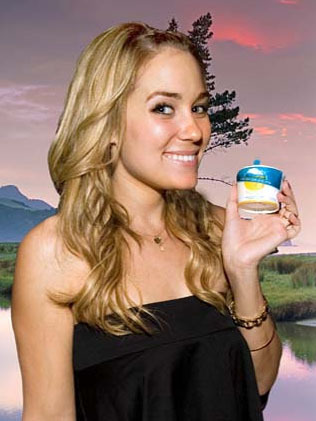
Five stars for this article just for it's title! Hah! The whole Hills phenomenon is beyond me. Watching rich folks on so-called "reality" TV has never done much for me (yes, that even goes for The Real Housewives franchise). Like that godawful new Bravo series about rich prep school kids in New York. The rich kids at my high school were unbearable -- I don't need to be reminded, thanks. But I digress. Salon investigates her "mystifying" appeal in a veiled review for her new book:
But there's also something rather mystifying about the Lauren Conrad phenomenon. For one, there isn't anything particularly memorable about her -- in fact, she's probably one of the dullest major characters in reality television history. In the "Hills" universe, Heidi is the mean one; Whitney is the smart one; Audrina is the ditzy one with the dead, dead eyes; and Lauren is, well, Lauren -- not especially charming, not the prettiest, not particularly interesting or talented, but somehow vaguely likeable, or at least likeable to a certain segment of the population.On What's Happening in Iran...And likeable enough, apparently, to compel some fans to make a very long trip for a book signing. Kim Long, a 25-year-old, traveled from Boston on two hours' sleep because "Lauren Conrad is not like your typical reality star." She likes that Lauren isn't a snob, she said, that unlike other characters on the show, she actually cherishes her friends. "She's real," she said. "She's someone you'd want to hang out and watch a movie with," said Colby Giordano, a 16-year-old New Yorker waiting in line with her two friends. "There's nothing wrong with being boring."
By on June 18, 2009 11:55 AM | No Comments
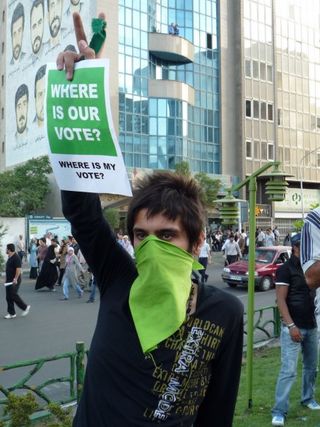
It's truly amazing flipping through Andrew Sullivan's painstaking documentation via Twitter of the Iranian resistance movement. Activists there have used Twitter, Facebook, and other social networking sites in ways that were simply unimaginable five years ago. If this isn't more evidence that the way activism works has fundamentally and forever changed, I don't know what is. But this post isn't about social networking -- we've heard all about that already.
No, this short post instead is about the ways in which this revolution must shake Americans' perception of a monolithic Middle East. We've never had much room in our brains for variation in Islam (despite, of course, our ability to laugh at the idea that all Christians believe the same things) -- and politically I think most Americans thought most Iranians were uneducated, regime-loving fundamentalists. If the Iranian people stood by while gay teenagers were publicly executed, then it must be because all Iranians assent to such a practice.
What we are seeing in Iran now is a display of the deep divisions among the Iranian people. This is not a homogeneous people. As Roger Cohen says in a NYTimes editorial, "The Iranian Republic has lost legitimacy. It is fissured. It will not be the same again. It has always played on the ambiguity of its nature, a theocracy where people vote. For a whole new generation, there's no longer room for ambiguity."
If it's true what Cohen says -- that Iran will never be the same again -- then it must also be true that our perception of Iran and the Middle East more generally will also never be the same. Twitter and other similar utilities have given Iran's people a gigantic megaphone that is reaching all corners of the world, glaringly exposing how ridiculous our uninformed perceptions of Iranians had been. Let's hope that their green scarves and tech-savvy resistance movement will help quell stereotypical perceptions of the Middle East and its people that have never been true.
FDA: Zicam May Destroy Sense of SmellBy on June 18, 2009 11:34 AM | No Comments
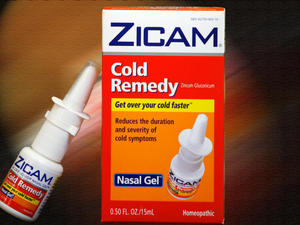
The FDA has officially asked consumers to discontinue use of the homeopathic cold "remedy" Zicam, as hundreds of users have reported that the drug destroyed their sense of smell. Here's the NYTimes:
Federal drug regulators warned consumers to stop using Zicam, a popular homeopathic cold remedy, because it could damage or destroy their sense of smell. Skip to next paragraphThe action is an early indication that the Obama administration is likely to take far more aggressive enforcement actions against drug companies than the Bush administration did.
[snip]
In 2006, Matrixx paid $12 million to settle 340 lawsuits from Zicam users who claimed that the product destroyed their sense of smell, a condition known as anosmia. Hundreds more such suits have since been filed.
Although the F.D.A. took no action during the Bush administration, Dr. Margaret A. Hamburg, who was named the agency commissioner by President Obama, said the incidence of anosmia associated with Zicam "strikes us as a fairly large problem."
The agency issued its consumer alert even though Matrixx refused to recall its products, a highly unusual event. In a news release, Matrixx said it had suspended shipments of Zicam and would reimburse customers who wanted a refund.
That would suck, eh?
Gold Pants DanceBy on June 17, 2009 11:21 AM | No Comments
My friend Thomas sent me this. So silly. I love it!
Cumming the FragranceBy on June 17, 2009 11:17 AM | No Comments
Brilliant.
Long Island Wants to Secede...By on June 16, 2009 8:16 PM | No Comments
| The Daily Show With Jon Stewart | Mon - Thurs 11p / 10c |
| Long Island Wants to Secede | |
Bwahahaha! Amazing.
Shoop. Shoop, ba-doopBy on June 16, 2009 5:20 PM | No Comments
A blast from the past. Loves it.
NYT Pressures Obama RE: DOMABy on June 16, 2009 4:38 PM | No Comments

If you've been in a cave lately, you might not have noticed that the Obama administration has come under fire for filing a disturbing, incest-invoking legal brief defending the "Defense Of Marriage Act" (DOMA) -- you know, that federal law passed under Clinton that prevents same-sex couples from receiving federal benefits, and also allowing states to refuse to recognize same-sex marriages legal in other states (violating the Constitution's Full Faith and Credit Clause). The NYT has chimed in with their own editorial, titled "A Bad Call on Gay Rights." Here's a taste:
The brief insists it is reasonable for states to favor heterosexual marriages because they are the "traditional and universally recognized form of marriage." In arguing that other states do not have to recognize same-sex marriages under the Constitution's "full faith and credit" clause, the Justice Department cites decades-old cases ruling that states do not have to recognize marriages between cousins or an uncle and a niece.Betty White vs. Chelsea LatelyThese are comparisons that understandably rankle many gay people. In a letter to President Obama on Monday, Joe Solmonese, president of the Human Rights Campaign, a gay rights organization, said, "I cannot overstate the pain that we feel as human beings and as families when we read an argument, presented in federal court, implying that our own marriages have no more constitutional standing than incestuous ones."
The brief also maintains that the Defense of Marriage Act represents a "cautious policy of federal neutrality" -- an odd assertion since the law clearly discriminates against gay couples. Under the act, same-sex married couples who pay their taxes are ineligible for the sort of federal benefits -- such as Social Security survivors' payments and joint tax returns -- that heterosexual married couples receive.
In the presidential campaign, President Obama declared that he would work to overturn the Defense of Marriage Act. Now, the administration appears to be defending it out of a sense of obligation to support a validly enacted Congressional law. There is a strong presumption that the Justice Department will defend federal laws, but it is not an inviolable rule.
By on June 16, 2009 4:33 PM | No Comments
Betty White makes life worth living.
Salon: Student Loans --> Educated Working PoorBy on June 16, 2009 4:17 PM | No Comments

Salon's Broadsheet has a piece analyzing the current student loan crisis that has been grossly exacerbated by the current economic recession. According to the Cato Institute, students today are taking out an average of $3,650 per year to pay for college -- more than double the figure from the early 1990s:
As Neal McCluskey, associate director at the Cato Institute, pointed out this week in a New York Times debate on student debt, in the 1990-91 school year -- the year before I started college -- the average full-time student received $2,640 in grant aid and $1,548 in student loans. Last year, grant aid was $4,656 and the average loan per student per year was $3,650. Over that same period, total charges, adjusted for inflation, at four-year public colleges rose 63 percent and 55 percent at four-year private colleges. The average graduate of a four-year public college in 2007 went into the working world with $20,000 in debt; for graduates of private colleges, it was $25,000. But as other Times readers have chimed in, poor and middle-class students at Ivys or professional schools can expect to walk away with $60,000, $110,000 or $160,00 in loans. Given that tuition, fees and estimated costs for a year at Harvard hit close to the average American household income of $50,000, even those who come from families with a healthy income will walk away with hefty loans.
It's disgusting that a "public" education in the United States come with a price tag soaring far past inflation into terrain only accessible by the wealthy. I can tell you that the students I teach at the University of Michigan are not representative of the state of Michigan -- a grossly disproportionate number of them are the wealthy children from Detroit's McMansion suburbs (of which there must be a dozen). They turn in scrapbook projects filled with pictures of their family cruises and glamorous trips to exotic locations. I don't blame them for their family's wealth. But I certainly blame the system that makes them think that it was by sheer virtue of their hard work and intelligence that got them admitted to this university.
Need an iPod?By on June 16, 2009 4:13 PM | No Comments

I'm selling mine on Ebay! 30 GB, Black, 5th generation, in great working condition! :)
Dear Trevor,By on June 16, 2009 2:03 AM | 1 Comment
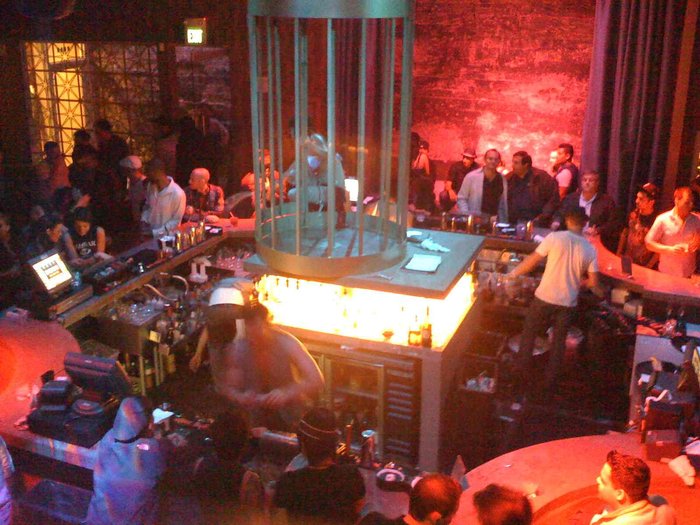
Because you will be home in almost one week (!) and because it's Pride (!!) and because you've always wanted a spacious and flashy place in the Castro to party your face off (!!!)...
I give you...Trigger.
You're welcome.
Love, Jackson
Stop AIDS leadership development retreatBy on June 16, 2009 12:33 AM | No Comments

Hey everyone!
It's been a couple of months since my last entry, so I wanted to sit down a write a little about a leadership development retreat I went on with the Stop AIDS project here in San Francisco.
For those not familiar, Stop AIDS is a community based organization that focuses on HIV prevention and information for Gay and Bi men in San Francisco.
A few weeks ago I received an email from Luis Guerra, one of the program coordinators over at Stop AIDS. Luis and I had had the pleasure of working together on projects through my employer, Connect To Protect SF. Luis is also connected to the Gay Men's Health Summit and is sexy as hell...but I digress...
Anyway, I got an email from Luis explaining that Stop AIDS had received a small grant to do leadership development with community organizers and that they were using the money to take folks up to the Russian River for the weekend to network, strategize and problem solve.
Excited for an opportunity to mix business with pleasure, I said hell yes and waited for the upcoming weekend to arrive.
Joining us for the retreat was Walter Gomez, also from Stop AIDS, Robert Moore from Affirmation (a social and political group for LGBT Mormons) and One Struggle One Fight (a values based, direct action group fighting for LGBT civil rights) and Seth Fowler, also from One Struggle One Fight.
We all had a great time talking about our work, comparing challenges, finding solutions and brainstorming ways to support each other in our different battles.
Originally there was supposed to be 10 guys going, but after a series of cancellations the group was down to five. I wasn't sure what to expect of the weekend, but I was amazed at how each of us brought very unique experiences to the conversation and that we were all genuinely committed to the work.
And last, but not least, there was champagne, fisting stories, a hot tub, cut throat Uno and at least two guys who saw the sunrise. Just saying.
Article RE: Sissyphobia & Gay MenBy on June 16, 2009 12:08 AM | 2 Comments
365gay.com is running a piece on sissyphobia among gay men titled, "Why can't you just butch it up?" The article wavers at times, and includes a few cringe-worthy moments (e.g. giving evolutionary psychology the time of day -- and in general automatically searching for biological causes of gendered behavior). But it's nice to see the topic up for discussion. Here's my choice quote:
And what about all those studies that show that many gay and bisexual men display some degree of gender non-conformity? That we're more likely to be androgynous than the typical straight man?National March on Washington a Go!In other words, many of us exhibit "gender atypical" behaviors - or we would exhibit them if we hadn't learned at an early age not to. But at the same time, we believe these behaviors to be deeply unattractive.
Holy self-loathing, Batman!
In short, as a community, we're literally at war with each other and, often, ourselves. And if this isn't about homophobia, it's hard to imagine what is.
"I think it's really strange what we do," says Kennedy. "Outside the community, if a straight person attacks someone for being effeminate, we attack them, we're furious. But within our community, we're terrible to each other on the very same issue."
By on June 14, 2009 10:59 PM | No Comments
It was up the air for a minute, but it looks like they're going forward despite the Mall being booked by other organizations (see this interview where organizer Cleve Jones says he has a permit, and the other events that day either aren't happening or will be friendly). Here's the promo clip:
Of course, this is THE SAME weekend I bought tickets to see Kylie Minogue in Toronto. Jesus H. Christ. My friends who are going with to Kylie wanna go to the march in DC, so I'm trying to work on a compromise where we do both. Yes, that means driving from Toronto to DC on the 10th. Sigh. Better be worth it, Cleve!
Gay Marriage Support by State, 1994-2009: Tipping Point?By on June 12, 2009 12:04 PM | No Comments
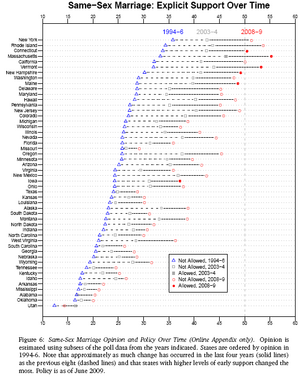
A veeeeeeeeery interesting and useful visualization (click it to enlarge) of a set of public opinion polls fromFiveThirtyEight. Here's the background:
Jeff Lax and Justin Phillips put together a dataset using national opinion polls from 1994 through 2009 and analyzed several different opinion questions on gay rights. Here I'm going to talk about their estimates of state-by-state trends in support for gay marriage. In the past fifteen years, gay marriage has increased in popularity in all fifty states. No news there, but what was a surprise to me is where the largest changes have occurred. The popularity of gay marriage has increased fastest in the states where gay rights were already relatively popular in the 1990s. In 1995, support for gay marriage exceeded 30% in only six states: New York, Rhode Island, Connecticut, Massachusetts, California, and Vermont. In these states, support for gay marriage has increased by an average of almost 20 percentage points. In contrast, support has increased by less than 10 percentage points in the six states that in 1995 were most anti-gay-marriage--Utah, Oklahoma, Alabama, Mississippi, Arkansas, and Idaho.
Not surprisingly, Utah is at the bottom of the barrel. I always wonder if the Mormons publicly trash gay marriage so much because they want to prove to America that they *really* believe in monogamous marriage. Mormons are in my mind a denigrated minority religious group in the United States, and their church's history of practicing bigamy is near the top of the list of reasons Americans are so suspicious of them. So it seems to me that gay marriage for them is a kind of whipping boy to prove to the rest of Americans that they're just as "normal" when it comes to relationships as any other red-blooded American. In any case, I think Utah is going to require a special kind of political strategy different from all the other states (whereas I think other states can be assessed almost regionally).
Other states of interest: Curious how far West Virginia has come in relation to the other states in its area, no? And look at New Jersey and Oregon! What's happened in these states that's so different from others? Examining that might provide some useful fodder for future campaigns in rather dismal-looking states like Arkansas and South Carolina.
New CDC Oral Sex Fact Sheet (And HIV in Chicago)By on June 10, 2009 11:02 PM | 5 Comments

As a follow up to Trevor's post on the exciting new study about MSM and barebacking, I'd like to call attention to two less exciting publications about gay male sexual health released on the American front. On June 8, the CDC published a new fact sheet on oral sex and HIV risk. Unsurprisingly, it emphasizes the risks of oral sex without exploring the social meanings that lead us to practice it in the first place. The jist of the fact sheet is summarized in this quote:
Even though the risk of transmitting HIV through oral sex is much lower than that of anal or vaginal sex, numerous studies have demonstrated that oral sex can result in the transmission of HIV and other sexually transmitted diseases (STDs). Abstaining from oral, anal, and vaginal sex altogether or having sex only with a mutually monogamous, uninfected partner are the only ways that individuals can be completely protected from the sexual transmission of HIV.
Just as positing abstinence and monogamy as the only safe sex practices is unhelpful advice for the gay community, so too is the fact sheet's recommendation that participants use condoms to reduce the risk of HIV transmission through oral sex. Nobody uses condoms for oral sex except that married guy I met at a bar last year in Paris. In the real world, both these strategies are often unrealistic in developing a culture of safer sex. Ultimately, they function merely as a punitive criticism of the sex practices in which many gay men engage. The development of a gay male culture that values safe sex requires us to explore how gay men associate their sex practices with the experience of pleasure, love, self-affirmation, joy, fulfillment, and other feelings that lead many of us to "irrationally" throw caution to the wind when we're having sex. Whether or not one feels comfortable with the culture of hooking up, it is irresponsible to discuss any sex practice without considering the social values of which it has been made expressive.
In a similar vein, the Chi-Town Daily News recently ran an article on a study showing half of HIV+ gay men in Chicago were unaware of being infected. Although the article emphasizes the need to develop a holistic approach to gay men's health that considers more factors than just serostatus, it also comes down hard on online hookup websites, quoting one man as saying, "'We need to know who makes up these social networks,' which include men who meet other men over the Internet or through phone networks,' [...] 'You're kind of playing Russian roulette.'"
The metaphor of Russian roulette suggests the possibility of a 1/6 chance of sudden death by having unsafe sex. This statement is unproductive fearmongering. It is true that hookup websites like manhunt.net and gay.com are one conduit through which some gay men have unsafe sex and contract HIV. But the gay male sexual universe would not be made any safer if these websites were to be eradicated, as the speaker seems to imply. We would do well to remember the lessons learned by earlier generations with the closure of the bathhouses in San Francisco after the outbreak of HIV/AIDS. As Gayle Rubin wrote in her 1990 essay, "The Catacombs: A temple of the butthole,"
The closure efforts set dangerous precedents for state harassment of gay businesses and gay behavior. Wholesale closure eliminated opportunities for sex education along with opportunities for sex. Closure drove men to the streets and alleys and parks, which were arguably less safe and clean than the clubs they lost.
In the last decade or so, hookup websites have become a major site of gay sexual activity and community life. These websites are often considered a realm of disease and lack of intimacy. While the dangers of hookup websites are real, they also serve as one of the only places in which the many varieties of sexual expression that have been rejected by society can exist. The discourses on safe sex would do well to consider the unique value of sexual and social network sites before condemning them wholesale.
Study Explores Extrasexual Reasons for Men Not Using CondomsBy on June 10, 2009 9:01 PM | No Comments | 1 TrackBack
No surprise from a study exploring MSM in Barcelona, Spain:
Abstract: Currently there is a growing trend toward high-risk sexual practices with casual partners in the group of men who have sex with men (MSM) in many industrialized countries. This study offers some understanding of why a group of men had unprotected anal intercourse (UAI). A grounded approach was used to analyze 20 interviews with MSM from Barcelona between 18 and 40 years of age who had at least one episode of UAI in the past three months. The results reveal that many respondents had UAI practices with casual sexual partners because they were in search of experiences that were not directly related to sexual relations: reaffirmation of a sense of personal worth and of their own physical attractiveness, offset shortcomings and feelings of emotional loneliness, the search for connection and intimacy, being in love, conversion of the risk into pleasure for the forbidden and a desire to rebel against established rules. In these cases, concerns about sexual and health care seemed to overwhelm and were not taken into account when having UAI. It is important that HIV prevention programs include in their messages the power of these motivations that lead to practices of UAI.
Read the whole article! This is the kind of data that too often gets lost in a traditional public health sexual risk / disease model (built on the back of the medical model) that asks survey questions about number of sexual partners, sexual practices, and risk levels but never evaluates the rich layers of social meaning that make those behaviors so powerful / exciting / worthwhile / meaningful. Hopefully studies like this one are a sign that this is shifting.
Colbert Clobbers "Don't Ask, Don't Tell"By on June 10, 2009 12:59 PM | No Comments
I almost spit out my stir-fry when I watched this bit last night on The Colbert Report -- all while in front of an audience of US Army officers in Iraq:
| ||||
By on June 10, 2009 2:56 AM | No Comments
Oof. This is pretty upsetting video (NSFW):
Here's the story from filmmaker Joseph Dana :
Most of the people that we talked to were dual American Israeli citizens. The answers in this video reflect the education and worrisome perspectives that many American Jews harbor towards Israeli politics. The sense of entitlement that the American Jewish community has when it comes to Israeli policy is on full raw display in the words of these young adults. Based on our interviews these people were from high socio economic backgrounds and had developed thoughts about current Israeli politics. The question is why more journalists are not covering this story. All you have to do is walk the streets of Jerusalem and you will find dozens of people that harbor the same beliefs. As a resident of Jerusalem, I can say that the people represented in this video are not members of a fringe group or simply drunk college kids. These people reflect the sentiments shared by many people in this country and this city. These people and their families are the core of the opposition to meaningful peace between Israel and her neighbors. This is what Obama is up against.
(Via Joe.My.God.)
Treating HPVBy on June 8, 2009 10:37 AM | No Comments
Several conversations with friends have brought to my attention a seemingly notorious ignorance about how to best treat genital and anal warts. In large part, this may be due to the fact that official information sources about STIs like the CDC have some significant holes in their fact sheet about HPV and men.
For example, the CDC website states, "Genital warts can be treated with medicine, removed (surgery), or frozen off. Some of these treatments involve a visit to the doctor. Others can be done at home by the patient himself. No one treatment is better than another."
No. According to my sources - a friend who is a physician's assistant as well as the colon & rectal surgeon that treated me for anal warts - certain forms of treatment are significantly more effective than others. Removal by fulguration (burning) greatly reduces wart recidivism compared to cryotherapy (freezing). This information is not readily available. A simple Google search using the terms "HPV gay men" is unhelpful. The results are either vague or couched in wishy-washy medical jargon full of caveats and disclaimers.
Unfortunately, I don't have access to a study that demonstrates the superiority of fulguration to cryotherapy. Apparently, neither do most MDs. This means that when gay men visit the doctor, they need to pose some essential questions that are most likely not part of the doctor or PA's routine examination:
1) If you bottom, request that your doctor examine your anus with a flashlight. This way, they will be able to visually identify any extant warts.
2) Request an examination with an anal scope. Warts can potentially grow 2-3" inside the rectum and cannot be located by flashlight alone.
3) If warts are present, request a referral to a surgeon that can perform fulguration, not cryo.
--Scott
Manhunt Publishes Top/Bottom/Vers DataBy on June 5, 2009 7:42 PM | 6 Comments
I was perusing my Google Analytics, when I noticed a few hits from a post over at The Sword that responded to my criticism of their research on Craigslist ads. They accused me of having an "ugly haircut". But I digress. That new post at The Sword linked to Manhunt's publication of this interesting map, which shows which states are top/bottom/vers-heavy based on their online profiles (which is the kind of data I wish I could get my hands on - but Manhunt refuses to release it):
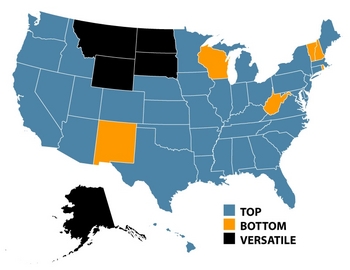
This falls right in line with my attempt to reconstruct Manhunt's databases in New York, Atlanta, and San Francisco (see here and here). Despite many gays complaining that cities are full of bottoms, research seems to indicate that this is empirically false.
I think part of this disconnect between the top-scarcity myth and reality is a healthy dose of bottom stigma, which fuels a devaluation of bottoms. Curious in Manhunt's data that there's a bunch of vers guys hanging out in the Northwest (Montana, South and North Dakota, and Wyoming) and Alaska. The only states that bottom-heavy in terms of Manhunt profiles are not geographically clustered: West Virginia, New Mexico, Wisconsin, Vermont, Rhode Island, and New Hampshire. How to explain the variation?
Dumb Research 101: "Marriage Bans --> Rise in HIV"By on June 5, 2009 5:35 PM | 2 Comments
This is perhaps one of dumbest studies I've heard of in years -- out of Emory, no less:
Bans on same-sex marriage can be tied to a rise in the rate of HIV infection, a new study by two Emory economists has found.In the first study of the impact of social tolerance levels toward gays in the United States on the HIV transmission rate, the researchers estimated that a constitutional ban on gay marriage raises the rate by four cases per 100,000 people.
"We found the effects of tolerance for gays on HIV to be statistically significant and robust - they hold up under a range of empirical models," says Hugo Mialon, an assistant professor of economics.
No wonder! Economists are behind this garbage! Jesus if they had any standards for smart research. Obviously, this is a worthless tidbit of information. There is no cause and effect here. There is only a coincidental correlation. They argue that the mechanism behind the correlation is homophobia, but in reality we can track a variety of factors that actually may be behind the rise in infections: condom fatigue, increasing poverty and homelessness and general growing disparities between rich and poor, abstinence-only sex education mandates, rise in effectiveness of HIV drugs, and a whole host of other complicated factors that make making such an assertion as "Marriage bans lead to HIV rise" a disgustingly ignorant claim.
Economists. Go figure.
(Via Joe.My.God.)
Drafting My Hookup Guide: "Openings" SectionBy on June 4, 2009 6:29 PM | 7 Comments

I've begun work on my guide to hooking up online. Over the next few days, I'll be posting drafts of the various sections for feedback. Let me know what you think! Below is the first section, an introduction of sorts:
OPENINGSContinue reading Drafting My Hookup Guide: "Openings" Section. Harvard to endow chair in LGBT studiesCongratulations! If you've made it this far, it seems that you're interested in hooking up online. That's a wonderful thing. In this booklet, you'll find an overview of some tips and tricks and strategies I've learned over the years -- both from my own experience and from conversations with countless queer men about their experiences online. Let me take a moment here to lay out what I think you can realistically expect to get out of this booklet, and a bit about what you'll have to learn by... practicing.
Gay men have used the Internet to find sex partners since the first dial-up services began to emerge in the early 1990s. While it may seem to be a terrifying idea to meet someone you have never met before and then on top of that to have sex with them -- don't fret! Hooking up online can be intimidating for even the most experienced of us, but over time I think you'll find that many of your fears and anxieties will diminish.
The Internet put millions of men in touch with a 24/7 sexual culture previously reserved for those in major urban centers like New York and San Francisco. While public health officials and the media have tended to view hooking up and the Internet as impediments to our health as queer men, I would argue that we can use both to expand our possibilites for intimacy, pleasure, community building, and bonding. This booklet is aimed at promoting those goals.
By on June 3, 2009 7:01 PM | No Comments
Harvard has recently announced its plan to endow a chair in LGBT studies (or "Gay Studies," as the NYT calls it). Who will they choose as the first visiting scholar?!
Input Needed: Guide to Hooking Up OnlineBy on June 2, 2009 6:42 PM | 4 Comments | 1 TrackBack
Hey everyone! So I've been thinking a lot lately about compiling a kind of handbook for hooking up online, with tips and strategies for success and a bit of wisdom from my rather robust experience in the matter. Obviously this would include much more than just tips about safer sex practices, but a whole range of issues from whether or not to respond to someone you're not interested in, to how to create a profile that sizzles.
I've dreamed up a few key sections for this mini-handbook:
I. What to Expect
II. Choosing Your Site(s)
III. Creating Your Profile / Ad
IV. Making Contact
V. The Hook Up
VI. Following Up
Sound useful? What kinds of things would you like to see included here?
xoxo
T
Lifelube: "How is Trevor Hoppe Healthy?"By on June 2, 2009 2:25 PM | No Comments

Lifelube has been running a wonderful social marketing campaign on their lovely website and on buses running through Chicago (ads that were the subject of a coordinated attempt to vandalize and silence the campaign) asking the question, "How are you healthy?" Many have chimed in, responding on their blog with short but punchy pieces on how these people understand themselves to be healthy. It's a cute and smart campaign.
Jim asked if I might submit something, so I wrote up this piece last month and sent it over. It was published today at Lifelube. Here's a taste:
What keeps me alive, thriving, and sane is quite simply my friends. I have been blessed over the many years to have a wonderful group of queer men and women (and everyone in between) in my life who have kept me sharp and critical in the face of a culture that would rather me as a gay man tell straight folks what to wear or how to style their hair (two fabulous professions, to be sure, but neither of which suit me).I stay healthy by celebrating the mind-blowing sex I had last week over cocktails with my friends. I find pleasure in talking about sex and exploring what makes it so powerful for me, and my friends keep me sane by facilitating an open, honest discourse about our sexualities. My friends believe that sex is good, healthy, and potentially transformative -- and that shared approach is what bonds us together...
Head to Lifelube to read the rest!!!!
By on June 2, 2009 12:10 AM | No Comments
What with the media frenzy surrounding the tragic murder of Dr. George R. Tiller, I thought it timely to post this video from the folks at Reproductive Health Reality Check explaining some of the Christian Right-perpetuated myths about late term abortion:
What's New in Gay Sex?: "Looking for Masculine"By on June 1, 2009 4:56 PM | 9 Comments
If you've every spent any significant amount of time on gay hookup websites, you've by now become accustomed to seeing every other profile professing a desire to meet "other masculine men" (which of course presumes their own masculinity). This of course often takes the form of the "looking for straightacting guys." But whatever the verbage, it translates into a systematic valuation of masculinity at a presumed gay femininity's expense. The message is clear: I want you to act like men are supposed to act, not like gay men are supposed to act.
As a bit of a mockery and as a direct challenge to this kind of entrenched sissyphobia, a few years ago I added to my profile the simply sarcastic statement: "Oh, and I'm totally gay acting". This is my way of warding off guys who might contact me and ask that I play into their masculinity game. I got sick of that game a long time ago, mostly because I always tend to lose. Many words could be used to describe me, but I can't imagine "masculine" to ever be on such a list.
But occasionally I get contacted by someone whose profile reads "Looking for masculine guys" or something to that effect. How to explain this? Today was a perfect example. I got a message from someone whose profile said just that, and we had a rather humorous (for me, I doubt he found it similarly amusing) exchange. I thought I would republish it here for dissection, but sadly he deleted his sent message before I could get around to it (I didn't even realize you could do that after someone had read it -- but clearly he could and suspected me, see the exchange below). But here's the basic tenor:
Him: So if we hook up, do I get inside information about your sex studies?Me: lol. Well I doubt I qualify under your stated requirements for hooking up. But you can get access to my findings whether or not we have sex. Check out my blog: www.trevorhoppe.com [Note: I'm a shameless publicity whore]
Him: lol well I read the "gay acting" thing and I contacted you anyways ;)
Me: Well I can't help but ask why you contact me if you read that part of my profile?
Him: omg I'm going to be next blog entry aren't I? [Note: yes, you are] Maybe you should have asked about my ideas about masculinity, rather than going straight to the stereotype.
Me: I disidentify with the category of masculinity, mostly because it tends to exclude and do violence against me. In other words, I have no interest in being included under your expanded masculine umbrella.
Him: It's no longer about being included.
Me: Clearly.
Okay, so maybe I was a little too sassy. But I really get tired of seeing all this masculinity-loving crap in people's profiles when their actions demonstrate that it isn't true at all. Clearly, his profile's stated interest in masculine guys wasn't actually an empirical reflection for his exclusive desire for masculine gay men.
I won't speculate about this individual's true intentions, but I have some theories about how these things function generally. I tend to think that -- rather than related to what they desire in others -- stating that you are into masculine men is a way to shore up your own desirability vis-a-vis claiming an ability to exclude feminine men from your sex pool. It is an effort to shore up your own normalcy by saying that you are into masculine (read: normal) men. I can count on one hand the number of profiles I have seen expressing a desire for feminine men, in part I think because declaring such a desire would in fact be claiming a kind of queer desire that is not valued and actively discouraged.
This is my theory: By claiming a desire for (or aversion to) ___________ men, you are not just making a claim about the people you're interested in meeting -- you are making a claim about what kind of person you are to desire such things. I think that this is true not just for masculine/feminine, but also other politicized categories like race, age, etc. I'm reminded here of friends whose profiles say "not into Black men" -- but who in public express how attracted they are to, gosh!, a Black man standing across the room. Saying you don't have sex with Black men, I believe, is about more than just race: it is saying that you are able to make such an exclusion and still get laid; it is saying that you don't have sex with the group of queer men at highest risk for HIV; and it is saying that you wouldn't dirty yourself by sleeping with a denigrated group of people.
This may all be a bit dramatic, but I think these are the undercurrents of online profiles that we need to be exploring hypercritically -- because beneath the surface, there is a rich depth of meaning and politics operating that does not readily meet the eye.
Bruno Face-Dicks EminemBy on June 1, 2009 1:56 PM | No Comments
Hilarious.
How did I get here?By on June 1, 2009 10:11 AM | 2 Comments
How did I get here!? Not writing on Trevor Hoppe's blog - for that I have Michael Hurley's introduction and Treviana Hoppington herself to thank - but sitting on a panel in Sydney, at a national forum about gay men and syphilis, asking myself this question.
Here's the concise version: I do social marketing and policy analysis at a PLWHA organisation in Melbourne, Australia. I joined an AIDS Service Organisation as a refugee from law school, having decided that really wasn't how I wanted to spend my life. I left the ASO after a year -- it was not a safe place for someone who cannot help but question -- but I was hooked on HIV, and before long I was back, working for a different organisation and a manager who encourages me to ask difficult questions.
Two main themes have bookended my time in the role -- syphilis and stigma -- and in my presentation to the forum I managed to combine the two. I argued we should not shy away from targeting "sexually adventurous" men with messages in honest language about their greater risk of exposure to syphilis -- even if that's ultimately thinking the issue in risk groups rather than risk practices.
The risk practice for syphilis infection is touch, so that's not a useful approach. For the "Other STI", we normally talk about "regular" testing and treatment, and recommend testing "more often" if you have "lots" of partners. But that's begging the question. How long is a piece of string? With syphilis in Australia, not enough men are at risk to justify asking every gay men to test every three months, so we end up talking about a subset anyway.
Apart from law, I trained in cultural studies, so I'm comfortable talking and thinking about sexually adventurous subculture, and I was arguing we need to look for 'cultural markers' in enhanced surveillance to guide our campaign, testing and treatment strategies.
Moments later, my former manager stood up to declare the concern with sexually adventurous men is really deficit thinking driven by moral panic about the 'Sexual Outlaw' and in fact men of 'every stripe' dip in and out of sexual adventurism. I have to summarise his argument from memory, as he reneged on his offer to provide me with a copy of the presentation, saying it remained embargoed.
It's a classic culturalist argument about the contingency, fluidity and dynamism of identity practice, and it got me thinking about a quote Trevor posted a few weeks back, about my beloved Michel Foucault:
Of course the social world includes the cultural, it includes the realms of discourse and symbolic representation, but the cultural is not all there is to the social. The distinctively social has to do with questions of social structure but also situated social practices. [my emphasis]
That's a glorious piece of exposition, alright. And it summarises everything that (for me) went wrong in the Nineties liberal arts obsession with identity and labels and representational politics. They only considered the cultural half of the equation.
Coming back to that forum, it's just implausible to posit a cultural reaction against sexual adventurism that doesn't generate possibilities and constraints for social interaction and identity practice. It's also a huge mistake to overlook the social rituals and barriers that make it difficult or impossible to 'dip into', say, crystal-smoking sexual networks.
To the extent we routinely describe this stuff as 'fluid' and 'dynamic', I would suggest that's true only in relation to the glacial pace of social research. One of my key informants now teaches fisting classes, and he points out he didn't go out one night and decide to sit on a fist -- he took nine years to learn how. It took my own social network several years to adapt to the introduction of crystal meth in the chemical repertoire of some of our number, and for a while there it got pretty ugly, with the suspension of our normal rules of care and hospitality according to who felt uncomfortable smoking what in front of whom.
And those are the fault lines across which knowledge transmission does not occur, leaving a core of identified players with expert knowledge (and the distortion of risk perception familiarity creates) and a loose fringe of occasional visitors unaware of what they don't know. It's not deficit thinking to point out the informational asymmetries and inequities, or to identify the power relations inherent in them, or the potential for HIV transmission. It's our job as campaign and health promotion strategists to do that.
(On this point I'm in furious agreement with Yale epidemiologist and cultural theory skeptic Ted White's recent contribution [registration required] to the Gay Men's Health Summit forum. I just differ in thinking you should do the research to map those fault lines before you start building interventions across them.)
So how did I get here? Funny story. It was a first-year law subject, a mandatory History & Philosophy of Law subject, that introduced me to cultural studies, critical theory, queer theory - it was heaven on a plate. You know the type of subject where they try to inoculate you against the intellectual blinkerage of professional socialisation? In HPL (pron: "hipple") this was called Learning To Think Like A Lawyer. And blow me down, it worked. I maintained a critical distance, a Foucaultian skepticism, all through my law degree, culminating in a flame-out in my final, research year. Inoculation is bad, y'all. So now I fly interstate to present on syphilis, and my parents wonder where it all went wrong.